make preferable
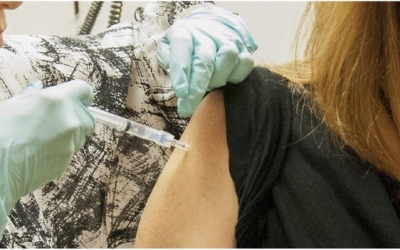
Vaccinated monkeys have developed "long-term" immunity to the Ebola virus, raising a prospect of successful human trials, say scientists.
The experiments by the US National Institutes of Health showed immunity could last at least 10 months.
Human trials of the vaccine started this week in the US and will extend to the UK and Africa, BBC reported.
The World Health Organization says more than 2,000 people have now died in the outbreak in West Africa.
Several experimental treatments are now being considered to help contain the spread of Ebola.
This includes a vaccine being developed by the US National Institute of Allergy and Infectious Diseases and pharmaceutical company GlaxoSmithKline.
Animal research, on which the decision to begin human trials was based, has now been published in the journal Nature Medicine.
It shows four crab-eating macaques all survived what would have been a fatal dose of Ebola virus five weeks later.
However, only half survived an infection 10 months after immunisation.
Dr Anthony Fauci, the director of the US National Institute of Allergy and Infectious Diseases, told the BBC: "The good part of this vaccine is that at five weeks or earlier you get full protection.
"The sobering news is the durability isn't great, but if you give a boost, a second shot, you make it really durable."
"We knew this worked in the monkey months ago and based on this paper we started human trials."
For now this is the best evidence available on how successful such a vaccine would be in people.
The first patient, a 39-year-old woman, was given the vaccine last week as human trials got under way.
There will also be separate trials of the vaccine against just the Zaire Ebola species.
These will take place in the US, the University of Oxford in the UK as well as in Mali and Gambia.
The WHO said safety data would be ready by November 2014 and, if the vaccine proved safe, it would be used in West Africa immediately.