make preferable
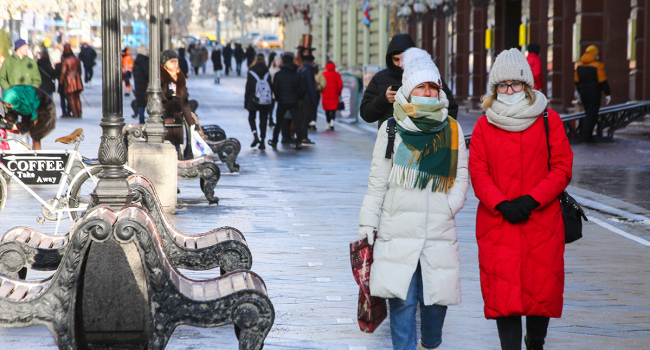
The incidence of influenza in Russia has increased several times compared to last year's indicators: 143.6 cases per 10,000 inhabitants, the Smorodintsev Research Institute of Influenza reported.
Among these strains, the swine flu (H1N1) dominates. As RIA Novosti writes, it originates from the well-known Spanish flu, which, according to some estimates, killed a hundred million people in 1918-1920. This flu has returned several times. The epidemic of 2009 was particularly severe. At that time, according to the World Health Organization data, 18,449 people died.
But there are also ordinary seasonal flu—the H3N2—and some other respiratory viral infections. They are back after a two-year hiatus due to COVID-19.
However, the coronavirus is not gone, although it has weakened greatly. It still poses a threat, along with some other infections.
Children under the age of five are at greatest risk for the flu. By the way, teenagers are also at risk. There have already been several fatal cases. A 17-year-old cadet of the Moscow University of the Ministry of Internal Affairs of the Russian Federation died in Stavropol, a 15-year-old girl died in Yaroslavl region, and a 10-year-old schoolboy died in Chelyabinsk region.
Educational and medical institutions have been quarantined in a number of Russian regions. Moreover, according to the head of the Rospotrebnadzor (Federal Service for Surveillance on Consumer Rights Protection and Human Wellbeing), Anna Popova, no restrictions are envisioned at the federal level.
However, according to experts, in reality, nothing unusual is happening yet.
Mass vaccination against flu is over in Russia, and 52.2 percent of the country's population—or 74 million people—were vaccinated. This is significantly less than last year: 85.9 million, according to Rospotrebnadzor.
As per experts, the epidemic will end when collective immunity is achieved; that is, when more than 70 percent of the population acquires it.