make preferable
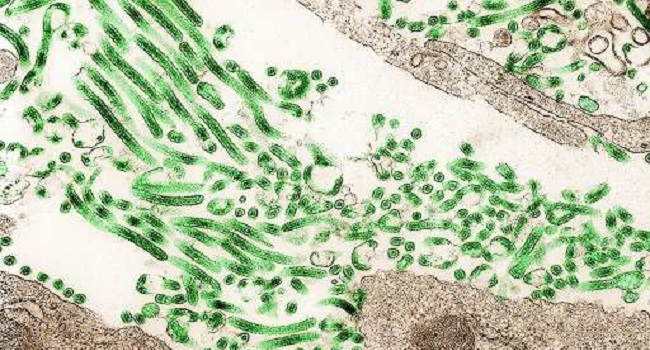
Researchers from the La Jolla Institute for Immunology (LJI) have announced that they have discovered the nucleocapsid structure of filoviruses—which include the Ebola and Marburg viruses. This information will help speed up the creation of universal drugs against these deadly and almost incurable infections. The respective research was published in the scientific journal Cell.
Ebola virus relies on its nucleocapsid structure to protect and replicate its own genetic material inside host cells—and suppress host cellular immunity. Thanks to the nucleocapsid, Ebola can turn infected host cells into virus-making factories.
For the study, researchers achieved a first in science—by harnessing an imaging technique called cryo-electron tomography, she glimpsed Ebola’s nucleocapsid structure at work inside actual infected cells.
At first glance, the Ebola virus nucleocapsid looks like a coiled telephone cord.
Also, they discovered that the nucleocapsid’s cylindrical shape is made up of three layers. Each layer plays a different role as the virus replicates in host cells. Before LJI’s imaging studies, the existence of the outer layer was entirely unknown.
According to the researchers, knowing the structure of the nucleocapsid will allow us to direct drugs against it and stop filoviruses.
As per the World Health Organization, mortality from hemorrhagic fever caused by Ebola and Marburg viruses ranges from 25 to 90 percent.