
 make preferable
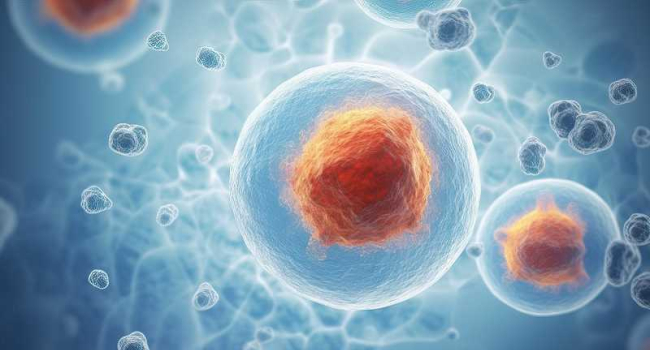
Researchers at the Gottingen Campus Institute for Dynamics of Biological Networks (CIDBN), the Max Planck Institute for Dynamics and Self-Organization, and the University of Marburg have discovered that during intrauterine development, embryonic skin cells are able to “feel” each other’s movements and coordinate their own movements with them. This process resembles the work of the auditory system and ensures more harmonious tissue formation. The results of the study were published in the journal Current Biology.
The study used tools from neurobiology, genetics, physics, and the study of hearing. The researchers found that cells in the thin layer of the epidermis respond to micromovements of neighboring cells, and this enables them to move in a more coordinated way and “stretch” the tissue more strongly. If this sensitivity is disrupted, the process of tissue formation slows down or stops altogether.
"Using AI methods and computer-assisted analysis, we were able to examine about a hundred times more cell pairs than was previously possible in this field," explains Dr. Matthias Haring, group leader at the CIDBN and co-author of the study. "This big data approach gives our results the high level of accuracy needed to reliably get to the bottom of these delicate interactions between cells."
The researchers assume that the same proteins that amplify sound in the human ear are responsible for cell communication. In the auditory system, they convert vibrations into nerve signals, and respond to movements at the atomic level.
"The evolutionary origin of these force-sensitive ion channel proteins probably lies in our single-celled ancestors, that we share with fungi and which emerged long before the origin of animal life. But it was only with the evolution of the first animals that the current diversity of this protein type emerged," explains Professor Fred Wolf, Director of the CIDBN and co-author of the study.
The study does not explain exactly how these molecular “sensors” are activated in the embryo, but it opens up prospects for medicine and bionics. Understanding how cells coordinate their movements opens up new approaches that enable success in tissue growth, the correction of birth defects, and the creation of sensitive soft robots.





