make preferable
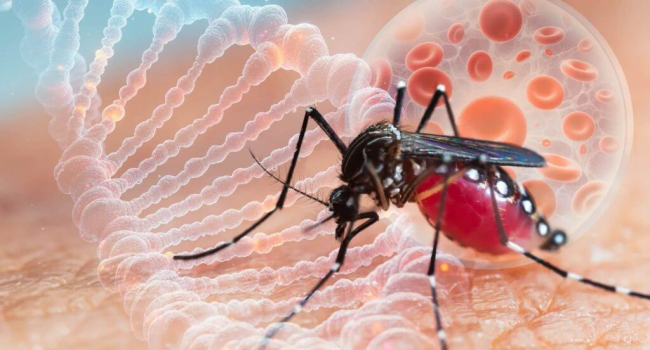
The summer of 2025 could see a record increase in the number of diseases transmitted by mosquito bites, European health authorities warn. The West Nile virus and chikungunya are causing the greatest concern.
According to data from the European Centre for Disease Prevention and Control (ECDC), the mosquito season in Europe is becoming longer and more intense. This is due to rising average annual temperatures, milder winters, and changes in precipitation patterns — factors that create favorable conditions for mosquito breeding and the spread of the infections they carry.
Health and climate experts note that climate change could lead to mosquito-borne diseases becoming endemic in Europe, Euronews reports.
“Europe is entering a new phase where longer, more widespread, and more intense transmission of mosquito-borne diseases is becoming the new reality,” said Pamela Rendi-Wagner, director of the European Centre for Disease Prevention and Control (ECDC).
According to the agency, there were 27 outbreaks of chikungunya in Europe in 2025, a record for the continent. In addition, there were 335 cases of West Nile virus infection, the highest level in the last three years. The statistics cover both European Union member states and a number of other countries in continental Europe.
The European Centre for Disease Prevention and Control (ECDC) predicts a further increase in the number of cases in the coming weeks, as the viruses are usually most active between July and September.
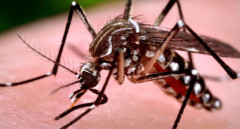
The main carrier of the chikungunya virus is the Aedes albopictus mosquito, known as the Asian tiger mosquito, which has now been detected in 16 European countries and 369 regions. For comparison, ten years ago, it was only found in 114 locations.
Cases of West Nile virus infection are reported annually in new settlements and administrative units. In 2025, the Romanian county of Sălaj and the Italian provinces of Latina and Frosinone joined the list of affected areas, where at least ten people died from the effects of the infection.
“As mosquito-borne infections spread, more and more Europeans will be at risk,” emphasizes Dr. Celine Gossner, head of the Foodborne, Waterborne, Transmissible and Zoonotic Diseases Unit at the European Centre for Disease Prevention and Control (ECDC).
Most people infected with West Nile virus are asymptomatic, but in some cases, serious complications such as encephalitis (inflammation of the brain) and meningitis (inflammation of the membranes surrounding the brain and spinal cord) are possible.
Chikungunya can cause fever, headache, nausea, rash, muscle pain, joint swelling, and debilitating joint pain, which often persists for a long time.
There are currently no specific treatments for chikungunya and West Nile viruses. Two vaccines against chikungunya have been approved in the European Union, but no effective vaccine against West Nile virus has yet been developed.
That is why prevention remains the main way to combat the spread of these infections. According to Dr. Celine Gossner, countries need to “strengthen and expand effective and environmentally safe mosquito control measures.”
Residents are also advised to take personal protective measures. In areas where infected mosquitoes are prevalent, repellents should be used, pants and long-sleeved clothing should be worn in the morning and evening hours, and mosquito nets should be used on windows, air conditioners, and fans.