make preferable
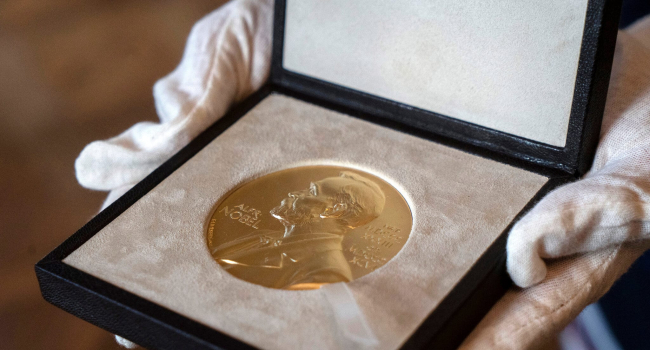
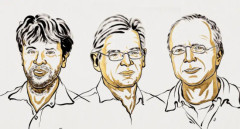
Mary Brankov, Fred Ramsdell, and Dr. Shimon Sakaguchi have been awarded the Nobel Prize in Physiology or Medicine on Monday for their discoveries related to peripheral immune tolerance, the Associated Press reports.
Brankov, 64, is a senior program manager at the Institute for Systems Biology in Seattle. Ramsdell, also 64, serves as a scientific advisor at Sonoma Biotherapeutics in San Francisco, while Sakaguchi, 74, is an emeritus professor at the World Premier International Research Center for Immunology Frontier Research at Osaka University in Japan.
The immune system has multiple overlapping mechanisms for detecting and combating bacteria, viruses, and other harmful agents.
Key “warriors” of immunity — T cells — are trained to recognize dangerous invaders. If some cells malfunction and could cause autoimmune diseases, they are destroyed in the thymus — a process known as central tolerance. The Nobel laureates uncovered an additional mechanism by which the body maintains immune control.
The Nobel Committee noted that it all began with Sakaguchi’s 1995 discovery of a previously unknown subtype of T cells, now known as regulatory T cells, or T-regs.
In 2001, Brankov and Ramsdell identified a mutation in the Foxp3 gene, which also plays a role in a rare human autoimmune disorder. Two years later, Sakaguchi connected these findings, demonstrating that Foxp3 controls the development of T-regs — which act as “guardians,” detecting and suppressing other T cells prone to overreact.
“This work opened a new field in immunology,” said Marie Wahren-Herlenius, professor of rheumatology at the Karolinska Institute. Researchers worldwide are now working to harness regulatory T cells to develop treatments for autoimmune diseases and cancer.
The award ceremony will take place on December 10, the anniversary of Alfred Nobel’s death — the Swedish industrialist and inventor of dynamite who founded the prizes. Nobel died in 1896.
The three laureates will share the 11 million Swedish kronor prize (about 1.2 million USD).