make preferable
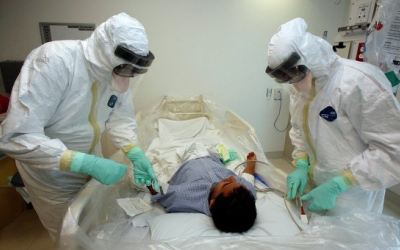
A group of scientists including three Nobel laureates in medicine has proposed that U.S. health officials chart a new path to developing Ebola drugs and vaccines by harnessing antibodies produced by survivors of the deadly outbreak, Reuters reports.
The proposal builds on the use of "convalescent serum," or survivors' blood, which has been given to at least four U.S. Ebola patients who then recovered from the virus. It is based on an approach called passive immunization, which has been used since the 19th century to treat diseases such as diphtheria but has been largely surpassed by vaccination.
The scientists propose using new genetic and other technologies to find hundreds or thousands of different Ebola antibodies, determine their genetic recipe, grow them in commercial quantities and combine them into a single treatment analogous to the multi-drug cocktails that treat HIV-AIDS.
That contrasts with current drug development, which focuses on finding one molecule, or a small number, to defeat the Ebola virus that has killed nearly 5,000 people in West Africa and infected thousands more since March.
The proposal was sent to officials at the Department of Health and Human Services, including the Food and Drug Administration, to lawmakers and to biotech companies. They have not responded, said geneticist Michael Wigler of Cold Spring Harbor Lab, who wrote and gathered signatures for the position paper.