make preferable
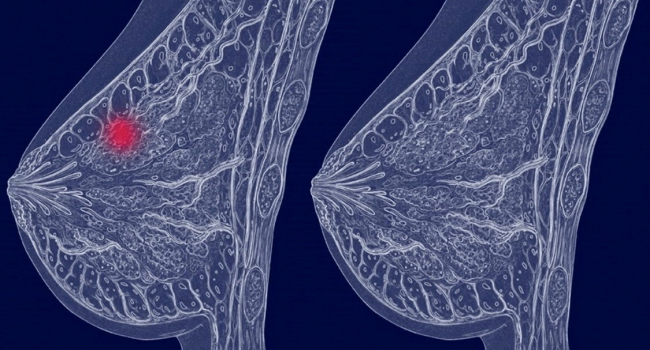
Understanding which cells within a tumor will drive metastasis remains one of the major challenges in cancer research. A study led by Ángela Nieto at the Institute of Neurosciences (IN), a joint center of the Spanish National Research Council (CSIC) and Miguel Hernández University (UMH) in Elche, offers an unexpected answer: the cells that later form metastases can already be found in the primary tumor.
The study combines analysis of a mouse model of breast cancer with patient data. The results show that at the invasive front of the tumor there is a specific population of cells capable of both invading other tissues and either proliferating or entering a dormant state. This balance determines whether cells that leave the tumor can initiate new tumor growth in distant organs—metastases, which are responsible for the most severe outcomes of the disease.
Nieto’s team has spent decades studying the epithelial–mesenchymal transition (EMT), a process that controls cell migration during embryonic development and is reactivated in tumors, allowing cancer cells to spread and form metastases. In this new work, the researchers go further, showing that metastatic ability does not arise randomly and is not determined solely by the environment of the target organ. Instead, metastatic potential is already present in a subset of primary tumor cells that transition into a highly metastatic state under the influence of a key factor—the gene Prrx1.
According to first author Raúl Jiménez-Castaño, the Prrx1 gene acts as a central regulator of tumor cell behavior. “We recently discovered that Prrx1 plays a key role in cancer spread. This work shows that it not only activates programs that allow cells to detach from the primary tumor, but also controls their ability to proliferate and form metastases or enter a dormant state that can last for years,” he explains.
“What is most striking is that the level of Prrx1 determines its effect on cancer cells,” adds Nieto. This helps explain a paradox observed in many tumors: highly invasive cells do not always form metastases, while highly proliferative cells often do not spread.
“At very high levels of Prrx1 expression, cells become highly migratory but lose their ability to invade and grow in other organs. Only at intermediate levels of expression is an optimal balance achieved between mobility and growth,” the researcher explains. In this state, cells combine invasiveness and proliferative capacity, making them the most dangerous from a clinical perspective.
To reach these conclusions, the team used mouse genetic models, single-cell analysis, chromatin studies, and spatial transcriptomics, which allow researchers to observe how cells are organized and behave directly within tumor tissue. They also analyzed tissue samples from breast cancer patients and found similar Prrx1 expression patterns, suggesting that the mechanism may be relevant for tumor classification and clinical prognosis.
The findings offer a new perspective on the origin of metastatic potential and open avenues for developing strategies to prevent tumor cells from entering this highly dangerous state. They also provide a basis for improving patient stratification by identifying markers that predict metastatic risk.