make preferable
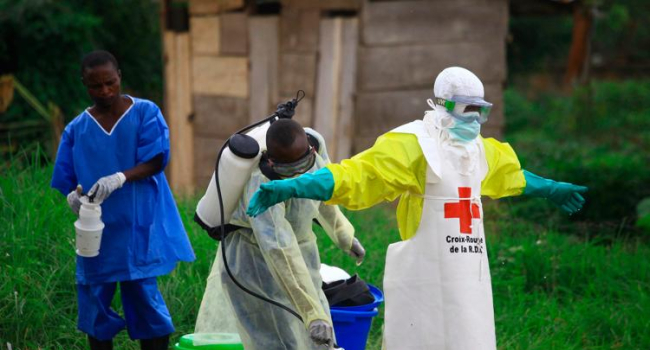
Africa’s leading public health agency has announced a new Ebola outbreak in eastern Democratic Republic of the Congo, specifically in Ituri province.
According to the Africa Centres for Disease Control and Prevention, around 246 cases and 65 deaths have been recorded, mainly in the gold-mining towns of Mongwalu and Rwampara.
The agency said it is coordinating with authorities in DR Congo, Uganda, South Sudan, and international partners to strengthen response measures and improve cross-border monitoring.
Ebola was first identified in 1976 in what is now DR Congo and is believed to have originated from bats. This marks the country’s 17th Ebola outbreak.
The virus spreads through direct contact with bodily fluids and can cause severe bleeding and organ failure. Early symptoms include fever, fatigue, muscle pain, headache, and sore throat. There is currently no cure for the disease.
Preliminary laboratory testing by the Institut National de Recherche Biomédicale (INRB) in Kinshasa detected Ebola virus infection in 13 out of 20 analyzed samples after consultations with the country’s health authorities.
Of the 65 reported deaths, four occurred among laboratory-confirmed cases, according to CDC Africa. Additional suspected cases have also been identified in the provincial capital, Bunia, while laboratory confirmation is still pending.
The Congolese government had not officially declared the outbreak at the time of reporting, though officials indicated that a press conference was expected later in the day.
Ituri province has been under military administration since 2021 due to ongoing violence involving numerous armed groups, including the Allied Democratic Forces (ADF), which has ties to the Islamic State group.
Over the past five decades, Ebola outbreaks across Africa have caused around 50,000 deaths. DR Congo’s deadliest outbreak occurred between 2018 and 2020, when nearly 2,300 people died. Another outbreak in Kasai province last year resulted in 45 deaths.