make preferable
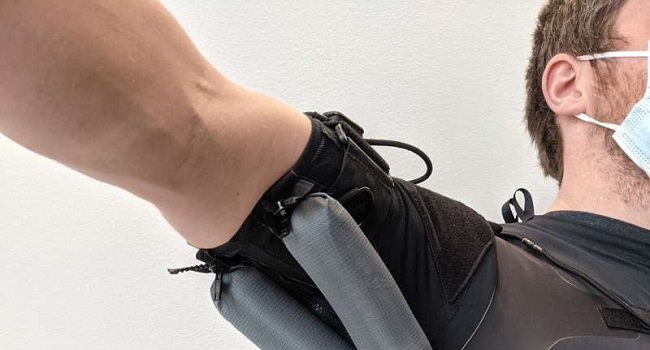
Researchers from the Medical University of Vienna, working together with scientists from ETH Zurich, Technical University of Munich, and the Faculty of Medicine, University of Belgrade, have developed a wearable neurorobotic system that combines electrical neurostimulation with a robotic hand exoskeleton. The results of the clinical study were published in the journal Science Advances.
The system, named SensoExo, is designed to help restore hand function in patients with neurological injuries, including those resulting from stroke, traumatic brain injury, and spinal cord damage. Fourteen patients with impaired hand movement and sensation participated in the clinical trial.
The technology combines two key components: a wearable exoskeleton that assists with finger flexion and extension, and a custom-fitted neurostimulation sleeve. The sleeve stimulates nerves and muscles in the forearm through the skin, while sensors placed on the fingers detect grip force and contact with objects. This information is then converted into electrical signals and delivered back to the user, effectively creating an artificial sense of touch.
According to the researchers, the goal of the technology is not only to mechanically assist movement but also to restore tactile sensation, which is essential for precise object manipulation.
During the study, participants tested the system in three different modes: without assistance, with the exoskeleton alone, and with the combined exoskeleton-and-neurostimulation setup. In half of the participants with more severe motor impairments, functional electrical stimulation of the hand muscles was also used to help open and close the hand.
The results showed that the combined approach delivered the best overall performance. Participants were able to grasp and hold both large and fragile objects more effectively. Muscle stimulation proved particularly useful when handling heavier items, while tactile feedback helped prevent excessive force when manipulating delicate objects.
The researchers emphasize that SensoExo remains an experimental prototype and is not yet a medical device ready for routine clinical use. Nevertheless, the findings demonstrate the potential of combining non-invasive neurostimulation with robotic exoskeletons to create more personalized and effective rehabilitation technologies for people recovering from neurological injuries.