make preferable
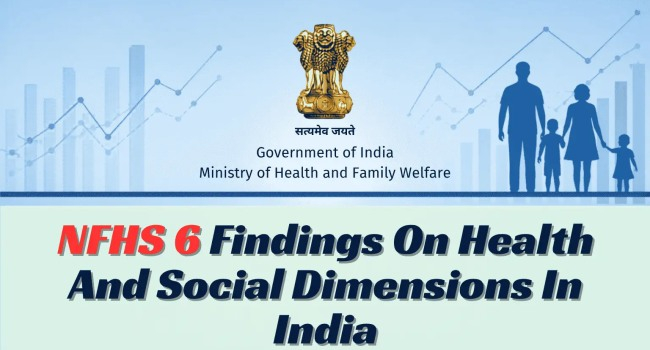
Healthcare reform is often associated with new hospitals, modern equipment, and medications. However, India's experience shows that improvements in public health do not always begin with medical institutions.
At a press conference held at the Embassy of India in Yerevan, Nilakshi Saha Sinha, India's Ambassador to Armenia, presented the results of the Sixth National Family Health Survey (NFHS-6), which covered more than 700,000 women and nearly 680,000 households across India. The findings highlight not only progress in healthcare, but also the decisive role that reforms in sanitation, digitalization, financial inclusion, and women's empowerment have played in improving health outcomes.
Toilets as a Public Health Tool
According to the embassy, one of the first priorities of the Narendra Modi government after taking office in 2014 was the expansion of sanitation infrastructure. The prime minister publicly drew attention to an issue that had remained outside the political agenda for decades: the lack of toilets in millions of households.
Poor sanitation contributed to the spread of infectious diseases, high infant mortality, and lower school attendance among girls.
Today, almost every household in the country has access to toilets, and India has been officially declared open-defecation-free.
According to Indian diplomats, the impact of the reform has been far broader than initially expected. Hygiene standards have improved, the incidence of several diseases has declined, school attendance among adolescent girls has increased, and women report feeling safer.
Clean Water Before Medicine
Another major priority was expanding access to drinking water in rural areas.
According to NFHS-6 data, 96.5% of the country's population now has access to improved water sources. For many rural communities, this has put an end to the daily journeys of several kilometres that women and girls traditionally made to collect water.
As a result, children are able to attend school more regularly, while women have more time for work, education, and healthcare.
The Women Bringing Healthcare to Rural India
A unique network of community health workers, known as ASHA workers, has played a crucial role in improving healthcare across the country.
Today, more than one million women work within this network across India. They visit households in rural communities, support pregnant women, monitor childhood vaccinations, and help residents access healthcare services.
This system has been instrumental in improving maternal and child health outcomes.
According to NFHS-6 data, more than 90% of births in India now take place in healthcare facilities, while childhood immunization coverage has reached 87.1%.
Over the past two decades, maternal mortality has fallen by 65%, from 254 to 87 deaths per 100,000 live births.
How Banking Access Improves Healthcare
Another unexpected driver of better health outcomes has been financial inclusion.
Since 2014, approximately 540 million bank accounts have been opened in India under the Jan Dhan program. Most of these accounts are linked to mobile phones and the national biometric identification system, Aadhaar.
This has enabled the government to directly transfer benefits, pensions, and social payments to citizens without intermediaries.
At the same time, the Ayushman Bharat health insurance program was launched—the largest public health insurance system in the world. Today, it provides financial protection to tens of millions of low-income families, and overall health insurance coverage has reached 60.2%.
For many Indian citizens, this means the ability to receive expensive treatments, including cancer treatment, without significant out-of-pocket expenses.
The Internet as a health factor
The study's authors also attribute the improvement in social indicators to the rapid spread of digital technologies.
Over the past few years, the proportion of women using the internet has nearly doubled—from 33.3% to 64.3%.
Using digital platforms, the government can track the rate of vaccination, condition of pregnant women, and the work of medical institutions. Many services are accessible even in the rural areas thanks to a network of digital service centers.
According to the Indian side, more than a half of immediate digital payments in the world are committed in India.
The New Challenge Is No Longer Undernutrition, but Obesity
Despite the success, the authorities acknowledge that the public health system faces new challenges.
While infectious diseases and malnutrition were once the main problems, diabetes, cardiovascular diseases, and obesity now pose an increasing threat.
According to the studies, approximately 31% of women and 27% of men in India are overweight.
In response, the government is promoting physical activity, healthy eating, and yoga through a range of preventive health programs. Preparations for a potential bid to host the 2036 Olympic Games are also seen as an opportunity to further develop the country's sports infrastructure and promote active lifestyles.
Health Begins Beyond the Hospital
The main conclusion of the survey is that improving public health cannot be achieved through the development of the healthcare system alone.
India's experience shows that health outcomes are influenced not only by medical care, but also by access to clean water and sanitation, girls' education, women's financial independence, and digital connectivity.
For this reason, India has spent the past decade investing not only in hospitals and healthcare facilities, but also in addressing social challenges that had long remained outside the traditional scope of public health policy.
The NFHS-6 findings suggest that this approach can deliver significant results even in a country of more than 1.4 billion people.
Representatives of the Embassy of India also noted that India's experience may be of interest to Armenia, particularly in the areas of digitalizing public services and using electronic systems to monitor health indicators. According to the Indian side, the regular collection and analysis of data make it possible to identify problems more quickly and adjust public policy accordingly.