make preferable
Born with no right arm below the elbow, it was hard for little Charlie Egan to embrace the festive spirit. Unwrapping presents was a struggle, and then there were the constant questions from others about his missing limb to contend with.
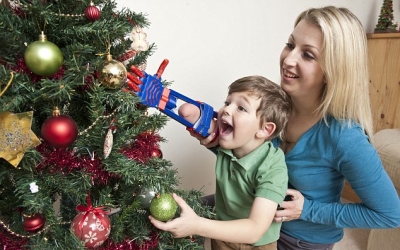
But the five year old can get to grips with Christmas with gusto this year - thanks to his new ‘Spiderman’ prosthetic arm printed from a 3D machine. Charlie is thought to be the first child in the UK to be fitted with an arm made with the revolutionary printing technology.
It was specially designed for him in red and blue, the colours of his favourite superhero Spider-Man, has a Spider-Man web motif and arrived just in time for the start of the festivities. He has used it to help decorate the tree, and it means he can now ride his scooter.
But just as importantly, having a superhero arm is helping Charlie fit in with his peers.
His mother Penny Egan said: ‘It will change his life. He has to deal with negative comments about people asking what happened to his arm, and staring at him every day of his life. Instead of saying what happened, now people say, Wow, you have a superhero arm. Charlie is thrilled with it. He can’t stop smiling.’
Mrs Egan, 34, and husband David, 32, an engineer sought help from US-based E-nable, a network of volunteers who design and make prosthetics mainly for children. E-nable’s members include engineers, artists and university academics who donate their expertise and time for free.
Charlie’s arm was designed from a plaster cast made by his parents.
The Baltimore network of engineers and academics designed the arm before having it made using a 3D printer based in London. It is strapped to his arm with Velcro, and when he flexes his elbow it causes the fingers to close and grip.
Charlie had an NHS prosthetic arm fitted at six months old, to help him balance when he crawled, but he preferred to try without it.
Mrs Egan said: ‘He never used his prosthetic arm that he had when he was a baby, and he managed fine without it. He learnt to crawl and walk just like any other baby, to him it was just like a dolly’s arm. When he was a baby he just played with his plastic arm just like he would do a toy, then as he grew into a toddler he ignored it. He never needed anything else, he just adapted to doing things without any proper hands. He managed wonderfully well. He could feed himself and climb to the top of a climbing frame with all his friends. He can even play computer games and controls the small buttons with the end of his arm.’
Then two months ago Mrs Egan heard about E-nable, based in Baltimore, USA.
She said: ‘I went on their website and I had to send photos of Charlie and his measurements. Then we were matched with someone locally down in London who had a 3-D printer.’
The couple had to provide him with the measurements and a design was drawn up. Then it was printed off the printer.
Mrs Egan said: ‘Charlie has always managed really well, but now he can feel more like the other children now that he’s got his new hand.’