make preferable
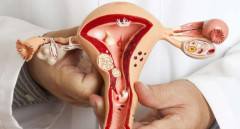
Women who have high levels of certain chemicals in their bodies experience menopause earlier, researchers from Washington University School of Medicine suggest.
Scientists studied 1,442 menopausal women. They also used information collected from the study during1999-2008, where 31,575 people were participated.
The menopausal women had an average age of 61, and none used estrogen-replacement therapies or had ovary-removal surgery. All had been tested for levels of endocrine-disrupting chemicals.
Researchers looked at blood and urine levels of 111 mostly man-made chemicals that are suspected of interfering with natural hormone production and distribution.
These chemicals included phthalates, which are found in plastics, common household items, pharmaceuticals, and personal care products; phytoestrogens, plant-derived estrogens; and dioxins/furans, etc.
Scientists also mentioned what chemicals especially cause earlier menopause: nine polychlorinated biphenyls (PCBs), three pesticides, two phthalates, and a furan (toxic chemical).
"Many of these chemical exposures are beyond our control because they are in the soil, water and air," senior author Dr. Amber Cooper said. "But we can educate ourselves about our day-to-day chemical exposures and become more aware of the plastics and other household products we use."
To avoid chemical exposure, Cooper recommended microwaving food in glass or paper containers rather than in plastic. It’s also important to study ingredients in cosmetics, personal care products, and food packaging that are used daily. Specialists warn, that while many of the chemicals are banned in the U.S., for instance, they are still used in many other countries.
Cooper says, this study doesn't prove causation, but it raises an association with that problem, so the results of the study need for future research.