make preferable
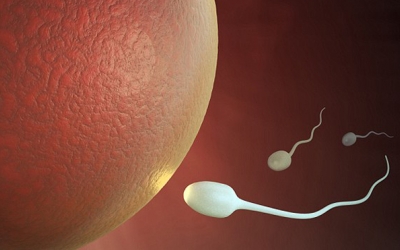
Teenage fathers are more likely to have children with birth defects because of problems with their sperm, scientists suggest. Scientists at Cambridge University say the male reproductive system may not work properly until a few years after puberty.
They found unexpectedly high levels of DNA mutations in the sperm cells of teenage boys, creating a 30 per cent higher risk of children being born with conditions such as autism, schizophrenia and spina bifida.
The team found that sperm cells of teenagers aged 12 to 19 underwent nearly a third more mutations than those of men in their 20s.
Male cells also underwent six times as many DNA mutations during their teenage years as women’s, the study of 24,000 parents and their children found.
The research, published in the journal Proceedings of the Royal Society B last night, also revealed that men have healthiest sperm in their 20s and early 30s, before the number of mutations rises again as they approach the age of 40.
Dr Peter Forster, who led the study, said the discovery is the first possible explanation for increased birth defects of children born to teenage couples.
Mutations occur when there is an error in the DNA copying process during cell division.
Cell division is the process by which a man’s characteristics are passed into the sperm, which is then passed on to his child.
Dr Forster, who carried out the research with colleagues in Germany and Austria, said it is unclear precisely why teenage boys have more mutations than older men.
But he said one explanation is that it takes some time for the reproductive system in young adolescents to start work without fault.
He said an alternative explanation is that young teenagers’ systems are working faster - with more errors as a result.
But he said that individuals should not be worried about the findings - because the numbers involved are so small.
The average man has a 1.5 per cent risk of fathering a baby with a birth defect.
The risk to teenage boys, in comparison, is 2 per cent - a significant 30 per cent increase when looked at the population as a whole, but an imperceptible risk increase to the individual.