make preferable
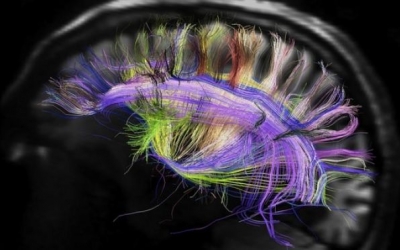
By directing ultrasound to a specific brain area, researchers were able to improve people's ability to discriminate between sensory inputs. Ultrasound is sound far above the upper limit of what humans can hear. It's useful in medical imaging. Doctors and technicians send bursts of ultrasound through tissue and record the echoes, creating a picture of what's inside whether it's an injured knee or a fetus in utero, Fox News reports.
Ultrasound also has potential for mapping the connectivity of the brain. Neuroscientists are particularly interested in understanding how brain areas chat with one another; in fact, a new federal project, the BRAIN Initiative, has the goal of mapping the healthy human brain.
Ultrasound is one of several noninvasive methods that stimulate the brain. Another is transcranial magnetic stimulation, which stimulates the brain with magnets. A third is transcranial direct current stimulation, which uses electrodes to deliver a weak electrical current to the brain through the scalp.
"We can use ultrasound to target an area of the brain as small as the size of an M&M," study researcher William Tyler, a neuroscientist at the Virginia Tech Carilion Research Institute, said in a statement. "This finding represents a new way of noninvasively modulating human brain activity with a better spatial resolution than anything currently available."
Tyler and his colleagues placed an electrode on the wrist, over the nerve that carries impulses from the hand to the brain. Using a small electrical current, they stimulated that nerve while focusing ultrasound on the brain region that processes the nerve's signals.
The researchers recorded the participants' brain responses with electroencephalography (EEG), electrodes on the scalp that measure the electrical activity of the brain. The ultrasound weakened the brain waves that encode the tactile stimulation.
But the next set of experiments revealed something truly strange.
The researchers conducted two tests of sensory perception. In the first, participants feel two pins against their skin and must distinguish whether they are being touched at one or two points. The closer the pins are to each other, the harder the task. In the second, researchers blow a series of air puffs against the participants' skin, and they must determine how many individual puffs they feel. The faster the puffs, the harder they are to discriminate.
People's performance actually improved on both tests.
"Our observations surprised us,"
What might explain this seeming paradox? The answer might have to do with how neurons function. When brain cells communicate, they can urge their neighbors to become active (excitation) or tell everyone to quiet down (inhibition). The ultrasound may have affected the brain region's balance of excitation and inhibition,
The boost in sensory perception vanished when researchers moved the ultrasound's focus just a half inch (1 centimeter). That means the method is a fine-grained way to "tweak" brain circuits, and potentially to treat brain disorders.