make preferable
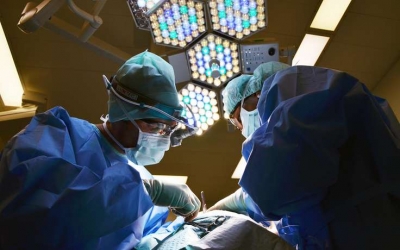
A Spanish hospital claims it has performed the 'world's most complex' face transplant, allowing a man terribly disfigured by a disease to lead a normal life.
Doctors said the 27-hour procedure – to reconstruct the man's entire lower face and neck – is the most difficult surgery they have carried out to date.
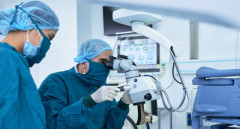
A spokesperson for the Vall d'Hebron hospital in Barcelona, where the surgery was performed, said a team of 45 doctors, surgeons, nurses and anaesthesiologists took part in the operation in February.
Other specialists from the hospital's plastic surgery and liver transplant departments were also brought in to advise on the procedure, details of which have only just been released.
The patient, a 45-year-old man, did not want to be identified.
Unlike similar operations, where a patient has had features of their face replaced, or rebuilt, the latest procedure was much more invasive.
The man had suffered a condition called arteriovenous malformation for the past 20 years.
This is a tangle of blood vessels in the brain which diverts blood from the arteries to the veins, bypassing normal brain tissue.
In this man's case, it caused facial deformities and problems with his vision and speech.
As a result, most of the man's face lower face was been reconstructed, including his neck, mouth, tongue and the back of his throat.
And all the skin and muscles of his face, nose, lips, jaw, all teeth, palate and cheek bones were transplanted by using plastic surgery techniques and microsurgery.
There was, however, a risk of severe bleeding that put his life in danger.
The man had been examined in several other hospitals, including the Mayo Clinic and Harvard Medical School, which had considered him to be inoperable.
But the Vall d'Hebron hospital ruled surgery was his only treatment option - and this week reveled the good news that the man is now living a normal life.
The hospital released a statement saying: 'This is the first time that a transplant of this complexity has been performed in the world.'
'The patient evolution after the surgery was successful, similar to any transplant patient at the hospital.
'Now he is already at home and only comes to the hospital for routine check-ups.'