make preferable
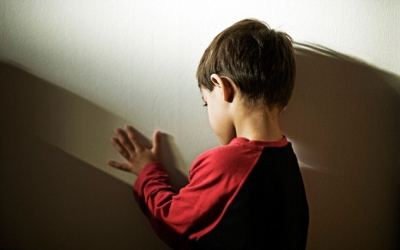
The number of children aged 10 or under who have been referred to the NHS to help them deal with transgender feelings has more than quadrupled in the last six years.
The Tavistock and Portman NHS Trust, the UK's only centre specialising in gender issues in under 18s, said the number of youngsters referred to them had risen from 19 in 2009-10 to 77 in 2014-15.
Over that period, 47 children were aged five or younger and two of the children were just three years old.
The trust, which has clinics in London and Leeds, said gender dysphoria in young people is a 'complex and rare condition' which is 'frequently associated with distress which may increase at puberty'.
According to the NHS the first signs of gender dysphoria can appear at a very young age.
A child may refuse to wear typical boys' or girls' clothes, or dislike taking part in typical boys' or girls' games and activities.
In most cases, this type of behaviour is just a normal part of growing up and will pass in time, but for those with gender dysphoria it persists into later childhood and through to adulthood.
Adults with gender dysphoria can feel trapped inside a body which does not match their gender identity.
They may feel very unhappy about social expectations that they live according to their anatomical sex, rather than the gender they feel themselves to be.
They may also have a strong desire to change or get rid of physical signs of their biological sex, such as facial hair or breasts.
Tavistock and Portman NHS Trust's Gender Identity Development Service sees young people up to the age of 18. While most referrals come from Child and Adolescent Mental Health Services (CAMHS), they also receive referrals from GP’s, paediatricians and schools.
The service works with children and young people who are experiencing difficulties in the development of their gender; this includes people who are unhappy with their biological sex.
As well as working with children and young people, the service works closely with family members.
Some, but not all, of the young people they see fulfil the criteria for a diagnosis of Gender Dysphoria.
The trust currently deals with about 800 individual cases across the country - some of these cases are open from referrals in previous years, meaning the caseload is higher than the number of annual referrals.
Over the years, the trust has seen an increase in the number of referrals.
A spokesman for the trust said: 'It is probably fair to say that young people are increasingly interested in exploring gender.
'There is not one straightforward explanation for the increase in referrals, but it's important to note that gender expression is diversifying, which makes it all the more important that young people have the opportunity to explore and develop their own path with the support of specialist services.'
Friends Lily, aged six, and eight-year-old Jessica - not their real names - were both born boys but were unhappy with their gender from an early age, say their parents.
Speaking to the BBC's Victoria Derbyshire programme, Lily said: 'If I had to live as a boy I would be really upset. But now I'm sort of living as a girl I feel much better.'
Jessica added: 'I really didn't want to be a boy. It was really frustrating for me. It feels like I'm in the wrong body.'
Jessica's mother Ella said a relative accused her of 'conditioning' her son and an anonymous call was made to the NSPCC claiming she and her partner were 'forcing their boy to live as a girl'.
She told the programme: 'There is nothing we have done to make this happen. You couldn't put a little boy in a dress if he didn't want to wear it.'
One charity which supports parents with children who are uncomfortable with their gender is Mermaids.
Its head told the BBC she has received around 60 calls in the past year from parents of under 10s who think their child might be transgender.
It not known how many people experience gender dysphoria, because many people with the condition never seek help.
A survey of 10,000 people undertaken in 2012 by the Equality and Human Rights Commission found that 1 per cent of the population surveyed was gender variant to some extent.
While gender dysphoria appears to be rare, the number of people being diagnosed with the condition is increasing, due to growing public awareness.