make preferable
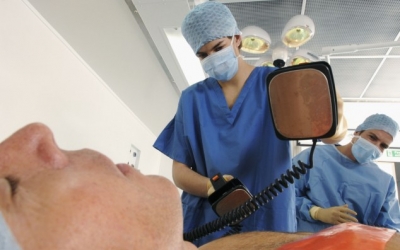
The first six British patients have been implanted with a wireless pacemaker – smaller than an AAA battery – that is set to revolutionise the treatment of heart disease, Daily Mail reports.
Standard pacemakers, which have changed little since 1958, regulate the pulse by sending electrical impulses into the heart via leads from a battery pack, implanted under the collarbone.
The Nanostim, which has no leads, is a tenth of the size of the traditional device and sits permanently in one of the chambers of the heart. It can take under ten minutes to position, compared with up to 45 minutes for an old-style pacemaker.
It is inserted through a vein via an incision in the leg, leaving no scars, and held in place by a screw-like anchor, which grips the inner wall of the heart.
Aside from being an easier procedure, doctors hope the innovation will help eliminate complications caused by traditional pacemakers and their leads, which include infections and clots.
The Nanostim is implanted directly into the heart in a minimally invasive procedure under local anaesthetic.
A small amount of sedation is given to the patient and local anaesthetic injected into the top of the leg. The pacemaker is inserted up the femoral vein in the leg within a flexible tube.
Like all pacemakers, it is battery powered and contains a computer chip which monitors electrical activity.
The battery lasts up to 13 years. ‘At the end of this time you can either remove and replace it, or insert another one next to it,’ says Professor Richard Schilling, who performed the procedure.
Maureen McCleave, 77, was one of those given the new device at St Bartholomew’s Hospital in London this month. She developed atrial fibrillation a decade ago and following a stroke was on medication to slow her heartbeat. But this meant that her heart rate could drop to a dangerous 40 beats per minute.
She is feeling much more energetic and is also sleeping soundly. ‘Before, I’d wake up at night with my heart just beating madly. That has gone. I feel so well.’