make preferable
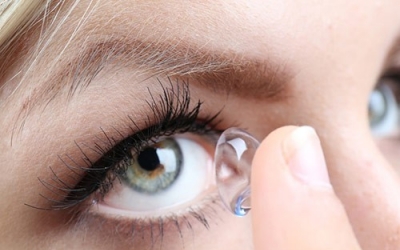
Wearing contact lenses may interfere with the delicate balance of microorganisms living naturally on the eye's surface, which could explain potentially serious infections among some users, a study has found.
Researchers discovered that wearing daily contact lenses appears to transfer bacteria from the skin to the eye, and say this could result in wearers suffering from inflammation and infections.
The study was based on a relatively small sample of nine contact lens users compared with 11 non-wearers, but the scientists carried out a detailed genetic analysis to identify the complete microbial “zoo” living on the eye and the nearby skin of each participant.
“Our research clearly shows that putting a foreign object, such as a contact lens, on the eye is not a neutral act,” said Maria Gloria Dominguez-Bello, lead researcher on the study at New York University's Langone Medical Centre.
The British Contact Lens Association, which represents the UK industry, said dirty or dusty contact lenses can cause temporary discomfort or redness but these symptoms usually improve once the lenses are removed.
More serious infections of the cornea - the transparent membrane covering the front of the eyeball - are much rarer, affecting about four in 10 000 contact lens wearers. Vision loss due to corneal infections associated with contact lenses is even rarer, affecting about six out of 100 000 wearers each year, the association said.
The “microbiome” or mix of microorganisms living on the surface of the eyeballs of contact lens wearers turned out to be more similar to parts of the skin just below the eye compared to the microbiome of the eyes of people who do not wear lenses. However, the number of bacterial strains and subtypes were greater in non-lens users' eyes compared to users, with the former having higher levels of Staphylococcus bacteria, which have been linked to eye infections.
About 5 245 distinct bacterial strains and subtypes were identified on the surface of the eyes of contact lens wearers compared to 5 592 strains and subtypes in non-users.