make preferable
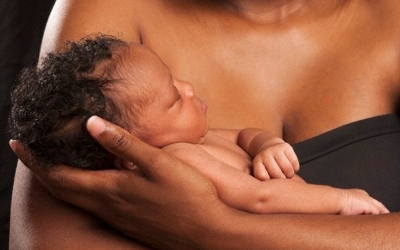
A young woman has become the first in the world to give birth to a healthy child after doctors restored her fertility by transplanting ovarian tissue - frozen when she was a child.
Scientists have hailed the birth as 'groundbreaking', adding it will have implications for millions of young cancer patients.
There have been cases of successful pregnancies after ovarian transplantation using tissue removed from patients when they were adults.
But, this case marks the first where the tissue was removed before puberty.
Experts said though successful, questions still remain over the ability of such immature ovarian tissue to develop to produce mature eggs.
The patient, who was born in the Republic of Congo, was diagnosed with sickle-cell anaemia when she was five years old.
After emigrating to Belgium at 11, doctors decided that her disease was so severe that she required a bone marrow transplant.
Her brother was found to be a match, but before the transplant could take place the patient had to undergo chemotherapy.
It acts to disable the patient's immune system and helps prevent rejection of the new bone marrow.
But, in the process chemotherapy can destroy the functioning of the ovaries permanently.
As a result, the girl's doctors removed part of her right ovary when she was almost 14 years old, and froze the fragments of tissue.
She had yet to start her periods, although there were signs she had started puberty, with breast development when she was 10.
The bone marrow transplant was successful, although the patient developed graft-versus-host disease and had to continue taking immuno-suppressive drugs for 18 months following her transplant.
Her remaining ovary failed and when she was 15, doctors gave her hormone replacement therapy to induce the onset of menstruation.
Ten years later, the patient received counselling after revealing she eager to become pregnant.
To restore the patient's fertility, doctors led by Dr Isabelle Demeestere, a gynaecologist at Erasme Hospital at the Université Libre de Bruxelles, stopped her hormone replacement therapy.
They then thawed some, but not all, of the patient's frozen ovarian tissue and grafted four fragments on to the remaining left ovary, and 11 other fragments at other sites in the body.
The transplanted tissue started to respond to her hormones, and successfully began to grow follicles that contain maturing eggs.
Five months later the woman began to menstruate, and continued to have regular periods.
More than two years after the ovarian tissue transplant the woman became pregnant at the age of 27.
She gave birth to a healthy baby boy in November last year.
The case is published today in the journal Human Reproduction.