make preferable
We all feel overwhelmed at times, but for some this can reach a breaking point.
Stress can lead to a breakdown where coping with the simplest, everyday tasks can be difficult and exhausting.
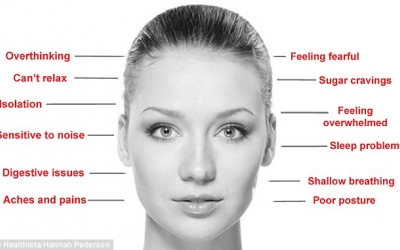
Writing for Healthista, stress expert Charlotte Watts says the symptoms of burnout sometimes show up in unexpected ways.
From digestion issues to sugar cravings and sensitivity to others' opinions, she says being aware of the signs of chronic stress can help prevent it.
Here, she reveals what to look out for:
1. Body aches and poor recovery from bugs and illnesses
2. Body aches and poor recovery from bugs and illnesses
3. Digestion issues: bloating, constipation and diarrhoea
4. Sugar and stimulant cravings
5. Poor posture
6. Breathing more shallow
7. Reactive to noise, light and sudden movements
8. Internal monologue and dialogue on overdrive
9. Fear-based reactions dominating – sensitivity to others’ opinions
10. Fear around relaxing, yet often tired
11. Ordinary tasks seem like hard work
12. Feeling a need to isolate yourself
13. Poor quality sleep leaving you un-refreshed in the day
HOW TO HELP YOURSELF:
Sitting down to allow meal times to be punctuations in a frenzied day can help on so many levels.
The act of taking time away from doing and focusing instead on the sensory, bodily experience of eating (not emailing during) takes us away from constant brain chatter and helps the body and breath settle.
In turn, this allows us to chew and fully digest our food for all-body health.
If we choose good quality protein like free-range meat, fish, eggs or goat’s cheese and plenty of mineral-rich vegetables and salad, we are less likely to turn to sugary snacks and caffeine to keep us going.
Start the day like this and you are much more likely to find a reasonable pace that gets things done without wearing you out.
The improved focus, memory and decision-making that results can fend off stress too.
Always find the peace and quiet you need, taking yourself away to regroup wherever possible.
Sitting up straight wakes up the lower brain so we can think more clearly and allows opening of the chest and diaphragm that helps us take the full inhalations that naturally energise and the full exhalations that release tension held in muscle and mind.
Laying down to focus on these breaths allows chest opening without tightness in the shoulders and neck.
It also helps to foster that important sense of safety and you may even feel you need to lie on your side in a protective foetal position.
If sitting at a desk is adding to your hunched posture, regularly walk around and stretch upwards.
If you can walk outside, greenery is always more calming than walking in urban environments, even just a park.
Safety is the key word here – places and situations where you feel comforted, calm and supported can create refuges where you can feel safe enough to relax fully in mind and body.
Whether it’s time with a good friend, long baths, walking in the countryside or a talking to a trusted counsellor, these acts of self-kindness can help convince our unconscious mind that we don’t need to stay locked in a state of exhausting vigilance.
Focussing on how your breath feels in your body can help you step aside from negative internal monologues and help appreciate that these are just words, not necessarily ‘how things are’.
Your mind is trying to protect you from potential danger. Talk to someone who you feel has a good perspective on life, to help you find objectivity.
Look for a six to eight-week Mindfulness course in your area to help develop techniques to intercept the internal voices and help give you space to relax.
We have become used to high stimulus, so being with peace and quiet can now seem alien and even scary.
Our brains simply weren’t built to receive the level of information input they are now blasted with, from sources like social media to continual news of disaster and violence, these do not help our world view that things are safe.
Looking at screens at night interferes with production of the sleep hormone melatonin and provokes micro eye movements that keep us on alert.
Make distance between you and technology as often as possible and move towards activities that bring down stress hormones; music, non-tech games, creative pursuits and yoga.
Going for regular walks as breaks provides the natural movement that brings down stress hormones and regulates breathing.
Too much of anything – partying, working, parenting and looking after others over yourself – is an imbalance.
To prevent exhaustion and worsening of stress-related conditions, we need to reset and allow all systems to recognize the resting place they need to routinely come back to.
Let others help you and learn to ask for help.