make preferable
A treatment that destroys tumours by turning them into ice is being offered to men as an alternative to traditional surgery for prostate cancer.
Doctors hope the highly accurate technique may help spare more patients from risks associated with full surgical excision of the gland – such as incontinence and erectile dysfunction.
Similar methods, collectively known as cryotherapy or cryosurgery, have been used for prostate cancer in the past, but involved freezing the entire gland, including the healthy areas.
The new focused cryotherapy treatment is possible thanks to advanced MRI scans that allow doctors to ‘map’ the patient’s prostate and target just the cancerous areas, while preserving the delicate surrounding tissues and nerves.
One of the largest reviews carried out last year by researchers at University College London suggests that the treatment is successful in between 70 and 90 per cent of newly diagnosed cases, and 50 to 60 per cent of cases where the cancer has returned after another type of treatment. Erectile dysfunction was experienced by up to 71 per cent of men, a figure that compares favourably with the outcome after other treatments.
The procedure, carried out under general anaesthetic, involves placing an array of fine hollow needles into the prostate through the perineum. A compressed gas, either argon or liquid nitrogen, is passed into the needles, leading to rapid cooling to about -40C.
The tissues in contact with the metal rods freeze, breaking down the walls of the tumour cells in the affected part of the gland, and they are destroyed.
To protect the surrounding tissues, a warm saline solution is passed through a catheter inserted into the urethra. This has a double purpose as the catheter is kept in place for approximately three weeks to allow the bladder to empty during recovery.
Most patients who have the treatment, which takes about two hours, return home the same day.
In some instances the treatment can be delivered using a spinal block, similar to an epidural used for women in labour, rather than a general anaesthetic.
The treatment will be offered to men who have not responded to radiotherapy or chemotherapy but are unwilling to have a radical prostatectomy, or surgical removal of the prostate.
It can also be used as a first option for newly diagnosed patients who cannot have non-invasive therapy that uses soundwaves to destroy cancer, a procedure known as high-intensity focused ultrasound, or HIFU.
Consultant urological surgeon Tim Dudderidge, at Southampton General Hospital, is one of a handful of British specialists performing the freezing technique in prostate cancer. He said: ‘HIFU may not be an option if the prostate is very large, due to a patients’ anatomy, or contains a build-up of calcium.
‘Focused cryotherapy has been used for a number of years to treat kidney cancer and we hope it will become an established option for prostate cancer.’
Whole prostate cryotherapy carries a high risk of impotence, as this often damages the nerves that regulate erections. However Mr Dudderidge says: ‘The hope is that these focused treatments will help preserve continence and reduce the risk of erectile dysfunction.’
Prostate cancer is the most common cancer in men, with more than 42,000 new diagnoses each year. Actor Sir Ian McKellen, 76, lives with the disease, while Hollywood legend Robert De Niro, 71, had prostate cancer surgery in 2003.
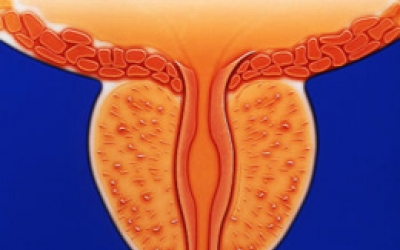
Every hour, one man dies from the disease, and there are more than 300,000 having some form of treatment for tumours in the gland, which is about the size of a walnut and wraps around a man’s urethra.
Even with early intervention and drug or radiotherapy treatment, 30 to 40 per cent of men experience a recurrence of prostate cancer, meaning that more aggressive methods may be necessary.
After the tumour is frozen and destroyed, the remnants are broken down by the body’s immune system, which then attacks any cancer cells that remain.
Though there are few studies on cryotherapy for prostate cancer, some experts believe the procedure offers several advantages over surgery and radiation, including less blood loss, a shorter recovery period and reduced post-operative swelling and pain. If needed, it can be followed by other conventional therapies, such as radiation therapy or surgery.
One recent study followed men with prostate cancer over ten years. Researchers concluded that cryotherapy might be as effective as radiation and other common treatments for smaller prostate cancers.
However, it may not be suitable for more advanced cases of prostate tumours. Experts say that sometimes the freezing liquid fails to kill all of the cancer cells. As a result, there is a chance prostate cancer will come back.
Mr Dudderidge said: ‘Whichever treatment a patient has, they are always closely monitored for any recurrence. We hope that focused cryotherapy will give us good long-term disease-free results.’