make preferable
The era of a nurse diligently making the rounds with a thermometer may be coming to an end after a British hospital began trialling new technology which monitors vital signs remotely.
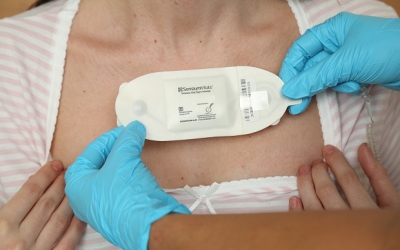
St James’s University Hospital, in Leeds, has become the first to ask patients to wear a lightweight wireless patch which checks heart rate, respiration and temperature.
The patch takes readings every two minutes and sends the data wirelessly to hospital IT systems. If the readings exceed pre-set thresholds, alerts are issued to nurses on handheld devices who can then respond immediately.
The initial trial will take place on 100 patients recovering from bowel surgery who are at significant risk of problems.
It is hoped the early warning system will help nurses spot any deterioration quickly to before life threatening complications emerge. It could also reduce the need for more expensive treatments and shorten hospital stays.
If the trial proves successful it could be rolled out throughout the NHS.
David Jayne, Professor of Surgery at St James’s, is responsible for monitoring the programme to see if it is safe and is cost effective.
“Post-surgery, patients’ health can deteriorate rapidly,” said Prof Jayne. “In these circumstances, it is important that clinicians are able to intervene as quickly as possible.
“The wireless monitoring system has the potential to play an important role in improving patient care in this area.
“During the evaluation, the system will be compared with standard hospital monitoring to determine if it allows earlier detection of post-operative complications. If successful, the project will inform larger studies involving the technology throughout the NHS.”
The trial is being funded by the National Institute for Health Research (NIHR), the research arm of the NHS and the patch has been made by British technology company Sensium Healthcare.
It is the latest in a raft of technological reforms that were announced by the NHS in June.
Within five years patients across the country are likely to be able to go online and speak to their GP via videolink; order prescriptions or see their entire health record as part of widespread digital revolution of healthcare in Britain.
NHS patients with long term illnesses could soon be able to monitor their conditions remotely through high-tech clothing and wearable gadgets which will link directly to their medical records.
Apps which remind patients to take their medication are also likely to be rolled out following a successful pilot on Tyneside.