make preferable
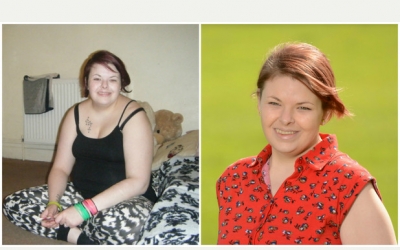
Three years ago Emma Gregory's Tourette's has become so severe she feared venturing out of her room.
She was tired of the name calling, whispering, and glares from people after she suffered a bout of extreme tics or couldn't stifle a barrage of swear words.
Emma has suffered from the debilitating condition since she was three and has been called a 'freak', been bullied at school, and humiliated on countless occasions.
Former neighbours have demanded her eviction from a property because her tics are so noisy causing a desperate Emma to buy a lead blanket in a bid to pin herself to the bed.
On one occasion a lady even put her hand on her head telling her she would 'cast her demons out' after a episode.
She lost hair on the side of her head from the force her tics onto her pillow in bed and one repetitive tic even broke her arm leading to a plate and pins needing to be inserted.
Emma was even banned from her support worker's cars because of the danger her ticks posed and has been thrown out of taxis on the way to hospital appointments.
At her lowest Emma, frightened to leave the house, retreated to her bedroom, piled on 10st in just 12 months as she found solace in packaged sandwiches, chocolate and crisps.
But now Emma, 27, is smiling broadly as we chat at her home in Lockleaze. The reason for this is a combination of extreme weight loss and pioneering surgery.
Desperate to have a proper life Emma found out that doctors were looking at whether deep brain stimulation (DBS) could help treat those suffering with Tourette's syndrome and were undertaking a trial.
But for Emma to take part she would have to slim down from the 18st 1lbs she had reached having turned to comfort eating. With a support worker she went to Slimming World and has never looked back.
"The first day I went they were a bit worried because they thought I would be a disruptive influence," Emma says.
"But since then it's been amazing and I'm their superstar. I've lost weight and made loads of friends."
Since that first visit in January 2013 Emma has shed almost 7st and has a transformed diet comprising muesli, salads, stews and soups.
Due to her huge weight loss, she now weighs 11st 5lbs, in March last year she had a DBS fitted during a four day stay at the National Hospital for Neurology in London.
"It got to a point when my Tourette's had got so bad it had completely taken over my life," Emma said.
"When I was in a shared hour I had such a bad tick upstairs that the ceiling fell in. I put my foot through it and thank goodness they were not in downstairs because there was plaster all over their bed.
"I used to get chucked out of cafes all the time so I stopped going in. Somebody called me a freak at a pub and there were always stares and comments."
At no stage does Emma seem angered by people's reactions. Indeed it would seem she understands that people find her tics and associated foul language shocking.
But that didn't mean their reactions didn't hurt deeply and it caused her confidence to rapidly slide.
"I think that's why I retreated to my room, it was a place of safety and sanctuary for me," she says.
"I would eat crisps, chocolate, packaged sandwiches - junk basically because of how I felt. I put 10st in a year."
But the weight loss and insertion of the DBS has made a priceless difference to her life.
"It is no exaggeration to say it has completely transformed my life - it is amazing," Emma said.
"My confidence has blossomed. I have been on the bus on my own, I go for walks and it's really exciting to think that one day I could even have a job.
"I've even applied to do some volunteer with St Peter's Hospice. I feel so much healthier, I sleep better, life is just brilliant at the moment.
Emma's Keystones Bristol support worker Kelly Stiddard added: "Emma's a completely different person - it's wonderful to see. When she first had the DBS switched on she made me a cup of coffee and I cried. The idea of her being able to do that seemed impossible. Now on Thursday's we go out and have a good pub lunch too - it's great."
Tourette's syndrome is a neurological condition (affecting the brain and nervous system), characterised by a combination of involuntary noises and movements called tics.
It usually starts during childhood and continues into adulthood. In many cases Tourette's syndrome runs in families and it's often associated with obsessive compulsive disorder (OCD) or attention deficit hyperactivity disorder (ADHD).
Tourette's syndrome is named after the French doctor, Georges Gilles de la Tourette, who first described the syndrome and its symptoms in the 19th century.