make preferable
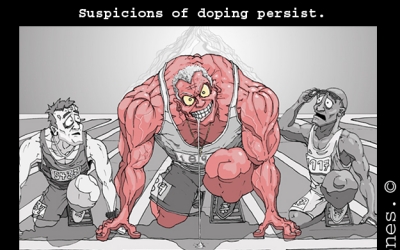
A number of the world's pharmaceutical companies are playing a larger role in anti-doping efforts at this year's Winter Olympics: They're providing information on drugs that once would have been considered proprietary trade secrets, Newsmax Health reports.
GlaxoSmithKline, Amgen and Roche are among the drugmakers that have begun sharing "confidential research and data" with anti-doping officials about experimental.
The increasing cooperation comes as doping athletes move away from easy-to-spot drugs like anabolic steroids to more sophisticated, obscure performance-boosting substances - many which were first formulated in pharmaceutical research labs.
"If you want to predict the future of doping it's essential that you have collaborations with the pharmas," says Olivier Rabin, science director of the World Anti-Doping Authority, which oversees the testing standards for the Olympics and other international competitions.
Building on its agreements with individual companies, in 2011 WADA signed a "declaration on cooperation" with the Biotech Industry Organization, which represents most of the world's biotech drugmakers. Under the agreement, companies voluntarily pass along early information about drugs in their pipelines that could be used to boost endurance, build muscle or aid recovery.
The industry's involvement with anti-doping efforts reached a new level in 2012 as GlaxoSmithKline provided a $30-million laboratory for testing officials at the London Summer Olympics. It was the first time any private sponsor had funded such a project at the Olympics.