make preferable

The world in the grips of an obesity epidemic.
More than a third of Americans and one in five Brits tip the scales at obese, while millions more are deemed too fat.
As waistlines bulge, and clothing requirements become supersized, rates of potentially deadly illness and disease are soaring.
Type 2 diabetes, a condition intrinsically linked to obesity, is on the rise.
And, as a recent study has highlighted, so too are a number of cancers.
The research, published in the Lancet journal, analysed data relating to more than five million people to establish the links between obesity and cancer.
And the results were stark.
More than 12,000 new cancers every year in the UK alone are associated with being overweight.
Furthermore, a person's risk of developing the disease increases in line with their waistline.
Researchers found that for every five point increase in a person's body mass index (BMI) they could be 62 per cent more likely to be diagnosed with cancer of the uterus, and 25 per cent more likely to develop kidney cancer.
These are daunting statistics that are hard to face.
But, unlike hereditary cancer risks, it is the one factor that every person can tackle to lower their cancer risk, and give their body's the best chance of avoiding the disease.
Weight-loss expert and NHS consultant, Dr Sally Norton told Daily Mail Online one of the ways being overweight increases the risk of cancer lies in the fact, excess fat doesn't just sit around your middle doing nothing.
'It produces hormones - one of which is oestrogen,' she said. 'After the menopause, when the ovaries have stopped producing hormones, fat is the main source of oestrogen.
'This means that post-menopausal women who are overweight, are at greater risk of tumours that are stimulated by oestrogen.'
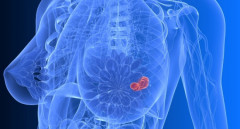
This group of cancers includes some types of breast cancer, endometrial cancer - where the disease affects the lining of the womb - and, some studies suggest ovarian cancer too.
Dr Norton adds: 'As many as 41 per cent of womb cancers may be attributable to obesity.'
Excess fat not only increases the risk of some breast cancers, it also renders treatment less effective.
Dr Norton points to a recent study, in mice, which found reducing food intake may reduce the risk of breast cancer spreading.
The research has prompted an ongoing trial into nutritional advise and weight-loss in women undergoing breast cancer treatment.
When it comes to the males of the species, being overweight or obese increases the chance of being diagnosed with colon cancer.
'It is more likely in people with a higher waist to hip ratio - the classic male beer belly - and may be associated with increased insulin levels, seen in type 2 diabetes,' Dr Norton told Daily Mail Online.
'Around 10 per cent of colon cancers are linked to obesity.'
Another type of cancer, thought to be linked to being overweight, is liver cancer.
Fatty liver disease is on the rise, as obesity levels increase.
The condition is also seen in those people with type 2 diabetes - also linked to obesity - and is more common in those people who carry most of their weight around their middle - so called apple-shapes, rather than pears.
'Fatty liver disease can, in some cases, proceed to cirrhosis, which is a risk factor for liver cancer,' Dr Norton explains.
She added: 'Oesophageal adenocarcinoma - gullet cancer - is on the rise too, probably due to the increase in acid reflux we see in association with obesity.
'Losing weight can help your symptoms of indigestion, and should therefore reduce your risk of developing cancer later.'
In addition, Dr Norton said obesity is also a risk factor for pancreatic, gallbladder, thyroid and kidney cancer.
'While it is very difficult to prove that losing weight will reduce an individual's risk of cancer, studies on groups who have lost a lot of weight with weight-loss surgery show convincingly that there is a reduction in the number of cancers seen,' Dr Norton said.