make preferable
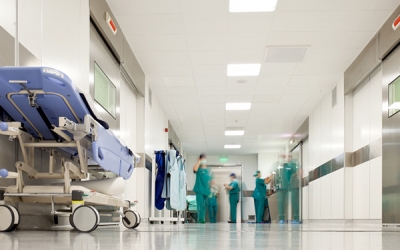
The Portugal-based pharmaceutical company, Bial-Portela & Ca. S.A., announced this morning that one patient in their Phase I drug trial has died at the University of Rennes Central Hospital (CHU Rennes).
The full text of the company’s announcement reads:
“The University Hospital of Rennes has just declared the death of the volunteer who was in a state of brain death after participating in a clinical trial with an experimental molecule of BIAL that was being held in a Phase 1 clinical trial unit in France.
Our thoughts and solidarity go out to the family of this volunteer.
Bial will keep following the hospitalized volunteers and working closely with the Health Authorities to understand the causes of this tragic and unfortunate situation.”
The as-yet unnamed drug, presumed to be BIA 10-2474, is an inhibitor of fatty acid amide hydrolase, or FAAH. The enzyme normally degrades and terminates the action of our naturally-occurring biochemicals that include ananadamide, a stimulator of the same receptors as the active components of marijuana. By prolonging the action of ananadamide, FAAH inhibitors have the potential to reduce pain and anxiety, among other neurological conditions.
This trial, run for Bial by the clinical research organization Biotrial at a private research center, was a Phase I trial. This stage of clinical development is the first-in-man use of the drug. These trials are generally done using healthy human volunteers with the goal of determining how the body metabolizes and responds to increasing doses of the drug.
The University of Rennes Central Hospital (CHU Rennes) released a more detailed statement on the overall episode where the deceased volunteer was previously reported as brain-dead. They reported at 3:15 pm local time (9:15 am Eastern time) that the patient died at midday. Five other patients remain hospitalized in stable condition.
CHU Rennes also reports that they have contacted 84 other volunteers in the trial and have completed medical examinations on 10 of them. The press release states that the clinical and radiological damage to the brain observed in the hospitalized patients could not be found in these 10 trial participants.