make preferable
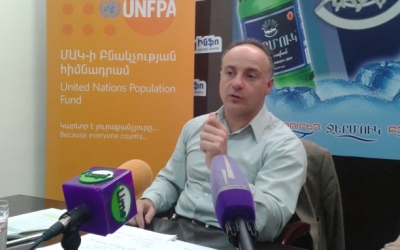
In Armenia the infertility rate is 17%, of which the primary infertility is 5%, and the secondary is 12%, said Garik Hayrapetyan, the executive representative of Armenian office of the UN foundation on population issues to the journalists on April 30. He mentioned that according to the standards of WHO infertility above 15% is considered critical.
The highest rates of infertility are registered in Yerevan, Armavir, Gegharkunik and Shirak regions. According to him, there is no exact answer to the question why infertility is common in these areas and for revealing the reasons new research is needed.
For comparison, the global rate of primary infertility was 1.9% (more than twice lower than in Armenia), and secondary - 10.5% (well below the figure of Armenia).
The WHO study showed that over the past 20 years worldwide infertility indicators have not changed much, except for Central and Eastern Europe, where the rate of secondary infertility has considerably grown. "In our region, compared with the data obtained 20 years ago, the rate of infertility increased by 2.7%. If in the 90s infertility in Central and Eastern Europe was 16.3%, according to a recent study, it is already 18%," Mr. Hayrapetyan said.
It is interesting that in Russia this index was lower: primary infertility was 1.9%, and secondary was only 3.2%. In Georgia, as Mr. Hayrapetyan mentioned, there is no exact data, because the last 20 years there was no such research in that region.
As for Azerbaijan, there are 400 000 infertile people in this country.