make preferable
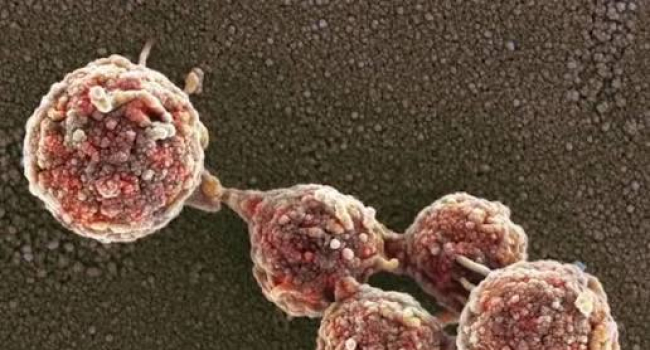
An international team of scientists has discovered a previously unknown group of large DNA viruses, named egoviruses. They turned out to be the closest known evolutionary relatives of poxviruses—the family that includes the smallpox virus. The researchers estimate that egoviruses may be present in the digestive systems of approximately 180 million people worldwide. The study was published in the journal Nature.
The scientists analyzed more than 85,000 genetic datasets from environmental samples and human and animal microbiomes. They identified a distinct evolutionary lineage of viruses and reconstructed the genomes of 12 members of the new group, along with more than 200 additional genomes of varying completeness.
Genetic markers of egoviruses were found primarily in samples from the digestive system. They were present in 2.3% of the human gut microbiome samples studied, as well as in samples from pigs, goats, chickens, cows, and buffalo. Prevalence was particularly high among buffalo, at 26%. Viral genetic material was also detected in some wild mammals, including lemurs, baboons, and rhinoceroses.
The researchers suggest that egoviruses may reside in the gut for extended periods, rather than simply entering it through food or water. However, it has not yet been established whether they can harm humans or animals.
The discovery could help shed light on the evolution of poxviruses. One hypothesis suggests that the common ancestor of egoviruses and poxviruses infected single-celled eukaryotes living in the digestive systems of ancient animals around 700 million years ago. Later, the evolutionary lineage that gave rise to modern poxviruses may have acquired the ability to infect animal cells.
However, the researchers have not yet obtained direct evidence identifying the organisms that serve as hosts for egoviruses. Genetic analysis points to a possible connection with certain single-celled eukaryotes living in the gut, but further research is needed to confirm this hypothesis.