make preferable
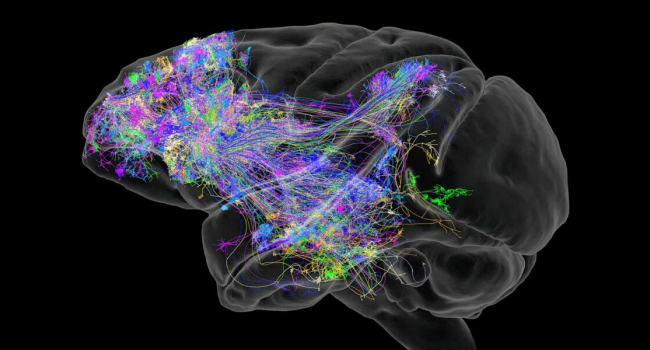
Evolutionary changes in a small stretch of DNA may have influenced the formation of cells needed for the development of a large and complex cerebral cortex in primates. Researchers from Taiwan and Japan reached this conclusion after studying the mechanism regulating the DACH1 gene.
The findings were published in the journal Science.
The study was conducted by specialists from National Yang Ming Chiao Tung University and Academia Sinica in Taiwan, together with colleagues from Kyoto University. The findings suggest that evolution may have altered not only the number of cells produced during brain development, but also the instructions determining which specific cell types form.
The scientists focused on basal radial glial cells (bRG), a type of neural stem cell that is particularly abundant in the developing primate brain and relatively rare in mice. These cells can divide repeatedly, increasing the number of cells that form the cerebral cortex. The cortex is responsible for perception, language, memory, and other complex functions, and also enables communication between different brain regions.
The researchers identified a small regulatory region of DNA that helps control the activity of the DACH1 gene. This gene is present in humans, monkeys, and mice, but the characteristics of its regulatory region differ between primates and other vertebrates.
“What interested us was that this gene already exists in both humans and mice. The important difference may lie not in the gene itself, but in the instructions that determine how it is used during brain development,” explained Professor Pei-Shan Hou of the Institute of Anatomy and Cell Biology at National Yang Ming Chiao Tung University.
To test the role of the regulatory region, the scientists grew three-dimensional human and rhesus macaque cerebral cortex organoids in the laboratory. These models reproduce some features of early brain development.
After the DNA region under investigation was deleted, the organoids contained fewer cells expressing a characteristic bRG marker, while other important populations of progenitor cells remained largely intact.
In another experiment, the researchers introduced the human regulatory element into the developing brains of mice. This increased the number of cells with features characteristic of basal radial glial cells.
Additional experiments showed that increasing DACH1 activity also affects cell development. When the researchers observed neural stem cell division in mouse brain tissue, the proportion of daughter cells acquiring bRG properties rose from approximately 4% to 15%.
The scientists also found changes in the proportions of nerve cell types being formed, including those involved in establishing connections between the brain's hemispheres. According to the researchers, DACH1 acts by suppressing another molecular signal involved in neural stem cell development.
The authors stress that the discovery does not directly explain the origins of human intelligence. However, it points to an additional mechanism of brain evolution: changes in the regulation of existing genes can influence which cells form and how neural networks are subsequently organized.
Further study of such mechanisms will help improve our understanding of primate brain evolution and refine laboratory models of normal and abnormal nervous system development.