
 make preferable
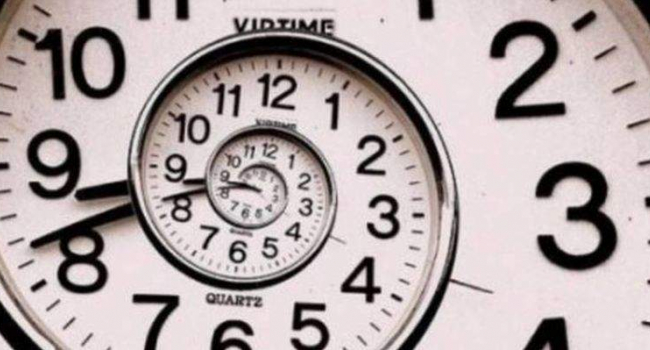
The world's most precise clocks run at a steady pace, messing up by only about 1 second every 300 million years.
But the brain takes those rhythmic seconds and makes its own sense of time — stretching the ticks and scrunching the tocks. But why can't the brain keep time like a regular clock? In other words, why does time fly when you're having fun, and why does it plod along when you're bored?
How the brain percieves time depends on its expectations. The brain can represent the probability that something is going to occur, given that it hasn't happened yet, said Dr. Michael Shadlen, a neuroscientist at Columbia University Irving Medical Center in New York City.
Every thought has various "horizons," Shadlen told Live Science. In a book, for example, horizons lie at the end of every syllable, the end of every word, the end of the next sentence and so on. Time moves according to how we anticipate these horizons, he said.
When you're really engrossed in something, the brain anticipates the "big picture" and sees both the near and the distant horizons, which makes time seem to flutter by, Shadlen said. But when you're bored, you anticipate the closer horizons such as the end of a sentence instead of the end of the story; these horizons aren't knit together as a whole, and time crawls.
There isn't a single spot in the brain that's responsible for how we perceive time in this way. Rather, any area that gives rise to thought and consciousness is likely involved in this task, Shadlen said.
"There are almost certainly a multitude of timing mechanisms in the brain," added Joe Paton, a neuroscientist at the Champalimaud Foundation, a private biomedical research foundation in Portugal. (These subjective timing mechanisms have nothing to do with circadian rhythms, or how our body is linked to the 24-hour rotation of our planet.)
One mechanism involves the speed at which brain cells activate one another and form a network when you're performing an activity. The faster those paths of neurons form, the faster we perceive time, Paton and his team have found in rodents.
Full article: Live Science





