make preferable
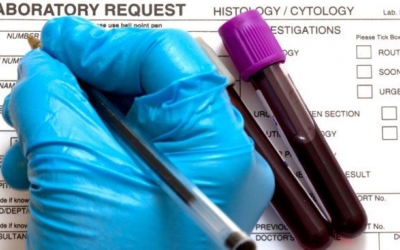
Men spill it, seal friendships with it, and, if they're aging rock guitarists, have it purified at Swiss clinics. But blood also tells a detective story. Just as the amount, color, odor, and feel of the oil on a car's dipstick offer clues about wear and tear on the engine, your blood can reveal critical details about the running condition of your entire body, FoxNews informs.
Of course, first you need to know what to look for and how to interpret the findings. That's why we've created a guide on how to read the red stuff. Order up all six of these tests at your next physical and you'll be doing more than just kicking the tires.
Start with the Basics: The CBC
Think of the CBC as an array of baseline numbers for key factors such as red (oxygen-carrying) blood cells, white (infection-fighting) blood cells, and platelets (clotting particles).
Learn Your Sugar Score
Blood tests are like radar for tracking type-2 diabetes. The standard measure is the fasting glucose test, which is part of what sounds like a congressional subcommittee: the Comprehensive Metabolic Panel. Fasting glucose is a one-off reading, so it's often paired with the A1c test of your average blood-glucose level over the preceding 2 to 3 months.
But if you score high on either of these tests—above 100 milligrams per deciliter (mg/dl) on the fasting test, or above 6 percent on the A1c—you should demand an oral glucose-tolerance test (OGTT).
Take an OGTT regardless of your fasting-glucose and A1c scores if you score 140 mg/dl or higher on a random glucose test (one you take without fasting beforehand), your belly's bulging (that is, your body mass index is 30 or higher), or you experience head-snapping slumps after a high-carbohydrate meal. Ditto if you have a family history of diabetes or heart disease. The test can last 2 to 5 hours, depending on the version you take. If you hit the 2-hour mark of an OGTT with a reading above 140 mg/dl, you're prediabetic. If it's above 200 at that point, there's no "pre" about it.
Keep an Eye on Fats, Too
If you have risk factors for cardiovascular disease—such as past cardiac events, a family history of the disease, hypertension, or you're a smoker—your target LDL may be below 100 mg/dl. If you're at high risk, ask your physician about an expanded lipid profile test, like the Vertical Auto Profile, which further breaks down the dangerous subtypes of LDL.
Look for Signs of Inflammation
The process by which inflamed arteries lead to cardiovascular disease is invisible except for a tracer—an elevated level of C-reactive protein (CRP) in your blood.
Make sure you feel perfectly healthy the day of your appointment: This highly sensitive test picks up all sorts of inflammation, even from a paper cut. That's a good reason to take it twice, at least a month apart, and average the two scores. Yours should fall under 1 milligram per liter; if it's above 3, your heart-attack risk doubles.
Have Your Prostate Checked
Pay great attention to tracking your prostate-specific antigen (PSA). Elevation of this marker can signal a problem—at least sometimes. PSA testing is not an exact science, because factors external to the prostate can cause the marker to rise. A high PSA reading may point to a benign enlargement of the prostate or even a bacterial infection known as prostatitis.
That's why the trend can be as important as the static number. Have a PSA test done every year and compare the result with that of the year before, to see if further investigation is warranted.
Don't Forget Your Thyroid
Thyroid problems hit men as well as women, and stress and poor sleep are often the culprits.
If your results are off the mark: Your doctor may order the more specific free T3 and free T4 follow-up tests.