make preferable
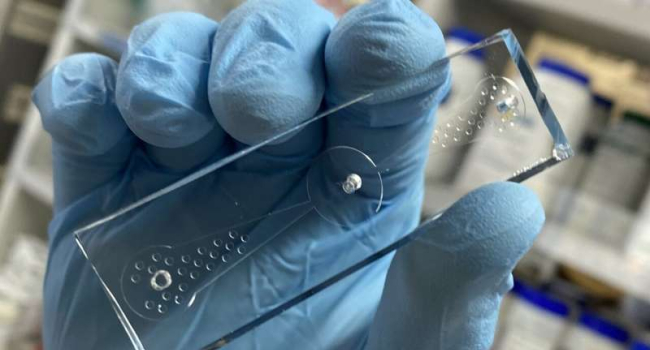
Scientists have developed a new device that can detect cancer cells. The findings were presented at a meeting of the American Chemical Society (ACS), Phys.org reported. In the past, studies have shown that some dogs do have the ability to detect different types of cancer in human blood and urine samples using their sense of smell. Now, scientists have identified the same ability in the roundworm C. elegans, which makes its way to cancer cells by following a specific smell. Specialists took this skill as a basis for the creation of a new device capable of non-invasive diagnosis of cancer in its early stages. The developers made a chip out of polydimethylsiloxane elastomer, which had holes on each side, connected by channels to the central chamber where the worms were located. On one end of the chip they added a drop with a solution of lung cancer cells and on the other a sample from healthy lung fibroblasts. After an hour, the scientists noticed that most of the worms preferred the side with the tumor cells. Based on the findings, the experts concluded that their development detects cancer in about 70% of cases. In the future, biologists plan to improve the accuracy and sensitivity of this test by training and selecting worms. Scientists also plan to test this method on several types of cancer, including human urine, saliva, and aerosol that is formed by breathing.