
 make preferable
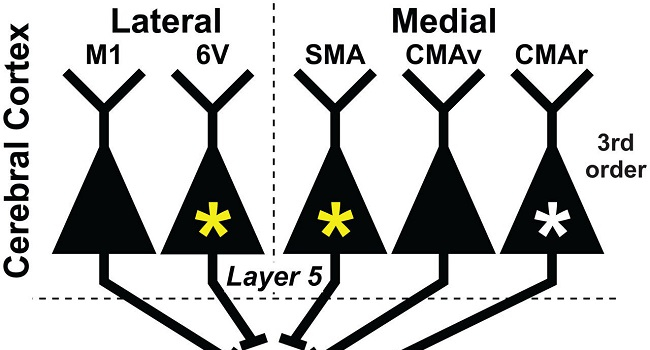
Neurobiologists at the University of Pittsburgh School of Medicine have conducted a new study that finds that several areas in the frontal lobe of the brain control vocalization muscles and may serve as the basis for complex speech.
The findings are published in the journal Proceedings of the National Academy of Sciences.
Led by Kristina Cherkevich, Ph.D., assistant professor of neurobiology, the scientists studied the neural networks of monkeys and macaques that are the source of downward command signals to control monkey vocalization, Medical Xpress reported.
"The findings, which may lead to a better understanding of speech disorders, refute the long-held assumption that only the primary motor cortex directly affects the larynx or vocal apparatus," said Professor Peter Strick, PhD.
It turns out that several areas of the cortex send signals to the laryngeal muscles to produce a finer voice in some primates.
"Such parallel processing in our neural wiring may explain why humans are capable of a very sophisticated language that allows us to exchange information, express and perceive emotions, and tell memorable stories," Strick added.





