make preferable
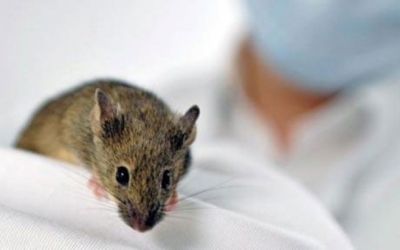
The essence of this finding is a series of molecular events that enable communication inside cells between the nucleus and mitochondria. As communication breaks down, aging accelerates. By administering a molecule naturally produced by the human body, scientists restored the communication network in older mice. Subsequent tissue samples showed key biological hallmarks that were comparable to those of much younger animals, Newsmax Health reports.
“The aging process we discovered is like a married couple-when they are young, they communicate well, but over time, living in close quarters for many years, communication breaks down,” said Harvard Medical School Professor of Genetics David Sinclair, senior author on the study. “And just like with a couple, restoring communication solved the problem.”
This study was a joint project between
Mitochondria are often referred to as the cell's "powerhouse," generating chemical energy to carry out essential biological functions. These self-contained organelles, which live inside our cells and house their own small genomes, have long been identified as key biological players in aging. As they become increasingly dysfunctional overtime, many age-related conditions such as Alzheimer’s disease and diabetes gradually set in.
Researchers have generally been skeptical of the idea that aging can be reversed, due mainly to the prevailing theory that age-related ills are the result of mutations in mitochondrial DNA—and mutations cannot be reversed.
Sinclair and his group have been studying the fundamental science of aging—which is broadly defined as the gradual decline in function with time—for many years, primarily focusing on a group of genes called sirtuins. Previous studies from his lab showed that one of these genes, SIRT1, was activated by the compound resveratrol, which is found in grapes, red wine and certain nuts.
For reasons still unclear, as we age, levels of the initial chemical called NAD decline. Over time, the research team found, this loss reduces the cell's ability to make energy, and signs of aging and disease become apparent.
Researchers found that by administering an endogenous compound that cells transform into NAD, they could repair the broken network and rapidly restore communication and mitochondrial function. If the compound was given early enough—prior to excessive mutation accumulation—within days, some aspects of the aging process could be reversed.
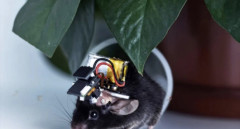
Examining muscle from two-year-old mice that had been given the NAD-producing compound for just one week, the researchers looked for indicators of insulin resistance, inflammation and muscle wasting. In all three instances, tissue from the mice resembled that of six-month-old mice. In human years, this would be like a 60-year-old converting to a 20-year-old in these specific areas.