
 make preferable
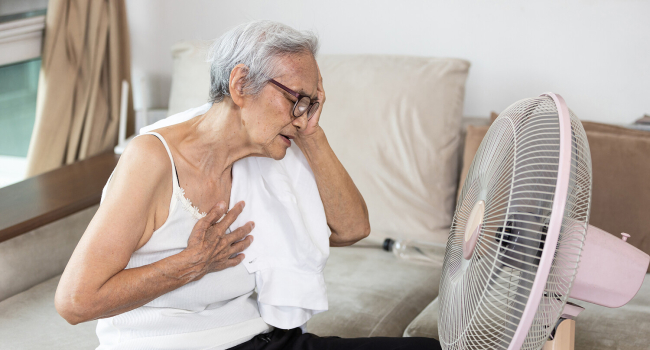
Researchers from the University of Southern California have found that prolonged exposure to extreme heat can accelerate biological aging in older people. The study was published in the journal Science Advances.
Biological age reflects the state of the body at the cellular and molecular levels, as opposed to chronological age, which is determined by the date of birth. Biological age exceeding chronological age is associated with an increased risk of morbidity and mortality. The aforesaid researchers studied how extreme heat affects this process.
They analyzed data from more than 3,600 Health and Retirement Study (HRS) participants aged 56 and older. Their blood samples taken over six years were examined to identify epigenetic changes, a process in which genes are turned “off” or “on” by a process called DNA methylation. Using the epigenetic clock, the researchers estimated the participants’ biological age and compared it with data on heat in the regions where they lived.
The analysis showed that residents of regions with more number of heat days age biologically 14 months faster than those living in cooler regions. This association persisted even after controlling for socioeconomic factors, lifestyle, and some other variables.
The elderly are particularly sensitive to heat due to a reduced ability to sweat and cool the body. And high humidity makes this situation worse by making it harder for sweat to evaporate.
The aforesaid study highlighted the need for urban infrastructure to adapt to climate change. The researchers suggested creating shaded areas, planting trees, and increasing green spaces.





