
 make preferable
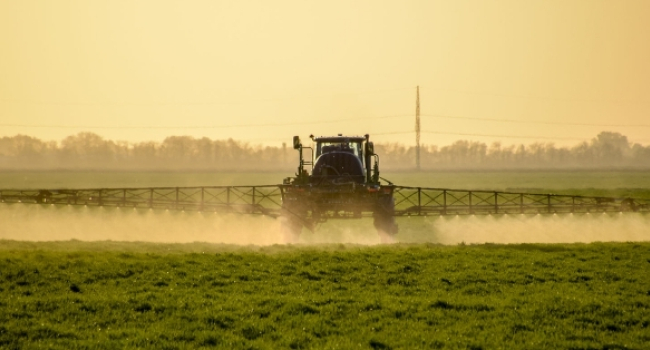
Ludovic Mauger, a former landscape gardener, thought he would live happily ever after on the coast of Brittany in France, but 30 years of glyphosate exposure shattered his dreams and his entire life. Five years ago, he was diagnosed with a rare form of cancer - intravascular B-cell lymphoma, Euronews reported. The disease has been recognized as an occupational disease.
Glyphosate is the most widely used herbicide in the world and yet the most controversial. Since 2015, the International Agency for Research on Cancer (IARC) has classified the substance as “probably carcinogenic”. Recent studies by research institutes such as the French National Institute for Health and Medical Research (INSERM) have established a likely link between exposure to the chemical and some forms of cancer.
However, the European Union extended its authorization for its use until 2033, based on the results of studies by the European Food Safety Authority (EFSA) and the European Chemicals Agency (ECHA).
The decision sparked protests from a number of environmental and consumer organizations, which took the matter to the European Court of Justice in April.
According to Xavier Cumul, a toxicologist and researcher at the French National Institute for Health and Medical Research (INSERM), the gap between the assessments is due to the methodologies used by research institutes and European regulators. “When a pesticide manufacturer wants to put a product on the market, these authorities require the manufacturer to carry out tests themselves, to prove that the product is safe,” he explains.
This process calls into question the independence of such studies.
"EFSA takes little or no account of epidemiological data and relies heavily on industry research, whereas INSERM and IARC make more use of academic literature. And they track utilization in real-world settings."
For Ludovic Mauger, whose life hangs in the balance, the toxicity of the substance is unquestionable. After undergoing more courses of chemotherapy than is normally allowed, his last hope is a transplant of his own modified stem cells. The chances are slim to none. “And as the oncologist told me, it's no longer about recovery,” he admits.
Since his cancer was recognized as an occupational disease, in addition to a small allowance, Ludovic receives monthly compensation from Bayer-Monsanto, the manufacturer of the substance that poisoned him.
"It's nothing. But that's not the point. It was more important for me to get it recognized that this is an occupational disease."
Despite the daily pain, Ludovic, although he can no longer work, wants to fight on. "I want to get the message out. Glyphosate has ruined my life - it has poisoned me. These products are destroying people and destroying nature," he insists. He is outraged by the EU's decision to extend the authorization for the use of glyphosate.





