make preferable
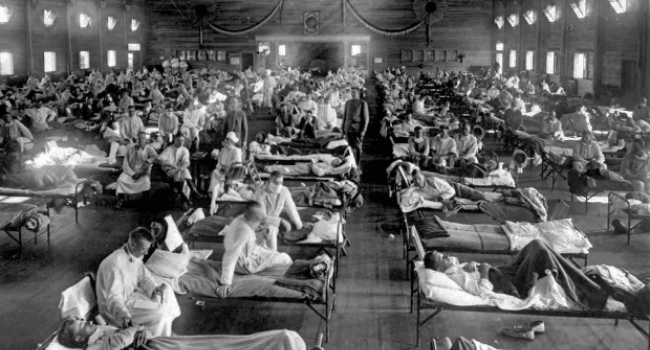
Researchers from the Universities of Basel and Zurich have used a historical specimen from a medical collection to decode the genome of the virus responsible for the influenza pandemic that swept through Switzerland between 1918 and 1920.
The virus’s genetic material reveals that it had already begun adapting to humans at the very onset of what would become the deadliest influenza pandemic in history. New viral epidemics continue to pose serious challenges to public health and society. Understanding how viruses evolve and learning from past pandemics is crucial for developing effective countermeasures.
The so-called Spanish flu pandemic of 1918–1920 became one of the most devastating in history, claiming the lives of between 20 and 100 million people worldwide. Yet until recently, little was known about how this influenza virus mutated and adapted during the course of the pandemic.
An international team of researchers led by Verena Schünemann, a paleogeneticist and professor of archaeology at the University of Basel (formerly of the University of Zurich), has now reconstructed the first Swiss genome of the influenza virus responsible for the 1918–1920 pandemic.
For their study, the researchers used a virus over 100 years old, taken from a formalin-fixed wet tissue sample in the medical collection of the Institute of Evolutionary Medicine in Uzhhorod. The virus was extracted from an 18-year-old patient from Zurich who died during the first wave of the pandemic in Switzerland and was autopsied in July 1918.
By comparing the Swiss genome with several influenza virus genomes previously published from Germany and North America, the researchers were able to demonstrate that the Swiss strain already possessed three key human-adaptive mutations that would persist in the virus population until the end of the pandemic. Two of these mutations made the virus more resistant to a key antiviral component of the human immune system—an important barrier to the transmission of avian flu viruses from animals to humans. The third mutation affects a protein in the virus’s membrane, enhancing its ability to bind to receptors in human cells, making the virus more stable and infectious.
A New Genome Sequencing Method Unlike adenoviruses, which cause common colds and consist of stable DNA, influenza viruses carry their genetic information in RNA, which degrades much more rapidly.
“Ancient RNA is only preserved for long periods under very specific conditions. That’s why we developed a new method to improve our ability to extract fragments of ancient RNA from such samples,” explained Christian Urban, first author of the study.
This new method can now be used to further reconstruct the genomes of ancient RNA viruses and allows researchers to verify the authenticity of the recovered RNA fragments.
Follow NEWS.am Medicine on Facebook and Twitter.