make preferable
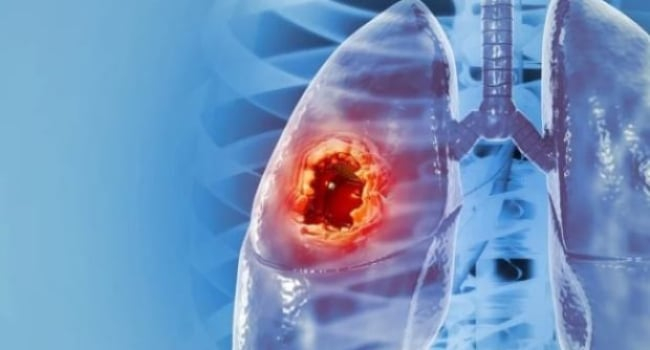
A research team from the Daegu Gyeongbuk Institute of Science and Technology (DGIST, South Korea), led by Yoonhee Lee and Kyogwon Koo, has developed a method to identify genetic mutations that cause lung cancer by analyzing the physical properties of exosomes—tiny particles released by cancer cells into the bloodstream. This new technology could pave the way for a non-invasive, highly accurate diagnostic tool—an alternative to traditional biopsies.
The focus is on non-small cell lung cancer (NSCLC), the most common form of lung cancer, accounting for over 85% of cases. Due to the lack of early symptoms, the disease is often detected too late. Traditional biopsies provide valuable insights but are associated with pain, risks, and the inability to perform them frequently.
The researchers introduced an innovative approach by analyzing exosomes derived from three different cancer cell lines with distinct mutations: KRAS, EGFR, and EGFR inhibitor-resistant mutations. Using atomic force microscopy (AFM)—a technique that measures the stiffness and shape of nanoparticles—they were able to detect differences in mechanical properties.
They discovered that exosomes from cells with KRAS mutations were significantly stiffer than those from the other lines. This suggests that even subtle changes in cell membrane structure are reflected in the physical characteristics of exosomes. Meanwhile, exosomes from the other two mutation types showed similar mechanical features.
To streamline and accelerate the analysis, the researchers incorporated artificial intelligence. They trained a DenseNet-121 neural network model on AFM data, enabling it to accurately determine the origin of exosomes with up to 96% accuracy.
The study opens the door to a new generation of “liquid biopsies” based not on molecular markers, but on physical properties. This approach minimizes invasiveness and could be applicable even in early or subtle cases of cancer.
According to the authors, the next step is to bring the platform into clinical settings, including testing on real samples from patients with lung cancer.