
 make preferable
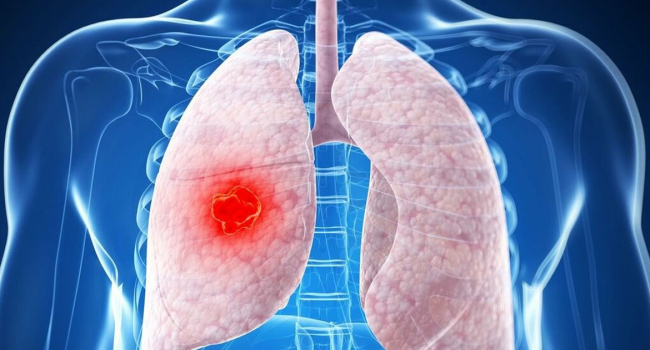
Researchers at the University of Florida have discovered that a small chemical compound produced by intestinal bacteria can significantly enhance the effectiveness of immunotherapy for lung cancer.
The findings of their respective study were published in the journal Cell Reports Medicine.
It is about a bacterial metabolite, which received the conditional name “Bac429,” which in experiments on mice significantly increased the sensitivity of tumors to therapy with immune checkpoint inhibitors.
This type of immunotherapy is today considered one of the most promising directions in oncology. These drugs eliminate natural restrictions in the immune system, enabling T-cells to more actively attack cancer cells. However, in practice, they help only a relatively small proportion of patients. According to various estimates, a stable effect is observed in 20 percent of patients, while the majority of tumors remain not very sensitive to treatment. That is why the search for means to enhance the response to immunotherapy is one of the important tasks of modern oncology.
During their work, the aforesaid researchers studied more than 180 strains of intestinal bacteria and identified several of them, the presence of which was distinguished by a more pronounced anti-tumor immune response. Further study enabled to find out that it is not the bacterium itself that plays a decisive role, but the specific substance that it produces—and this substance is the metabolite Bac429.
When it was injected into mice with lung cancer, which initially responded poorly to immunotherapy, in combination with immune checkpoint inhibitors, the growth of tumors slowed down by about half. Also, the effect was significantly weaker if immunotherapy was used without the addition of the metabolite. This means that the compound directly enhances the immune response and helps the immune system more effectively recognize and destroy cancer cells.
The special significance of this discovery is that the use of a single metabolite is potentially safer and easier than trying to change a patient’s microbiota with bacterial vaccination or fecal transplantation. The metabolite can be standardized, accurately dosed, and then converted into a drug. Researchers are currently studying its mechanism of action and developing derivative compounds that could be used in human clinical trials.
The study highlights also a clearer link between the intestinal microbiota, the immune system, and the effectiveness of anti-cancer therapy. In the future, this may lead to the development of new combination approaches where immunotherapy will be supplemented with medical drugs that will be created based on bacterial metabolites, which will enable to significantly expand the range of patients who will truly benefit from this treatment.





