make preferable
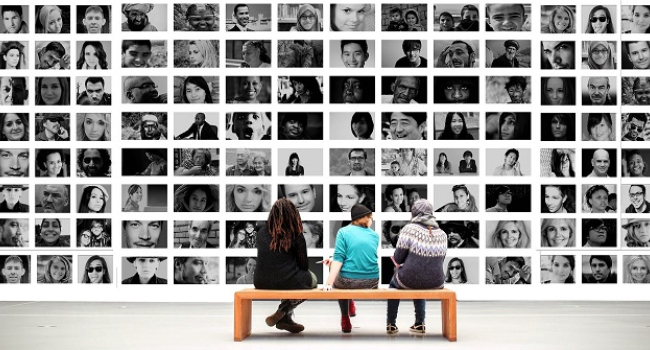
Scientists have developed an artificial intelligence system capable of determining the speed of a person's biological aging simply by analyzing facial photographs. The study was published in the journal Nature Communications.
The results proved to be quite alarming: individuals whose faces age faster than average have significantly lower survival rates when battling oncological diseases.
The research was conducted by a team of specialists from Mass General Brigham, one of the largest medical research centers in the United States. Their system, named FaceAge, utilizes deep learning technologies to estimate "biological age"—a measure of how "worn out" an organism is from a physiological standpoint, as opposed to its chronological age.
In this new study, researchers went a step further. Instead of analyzing a single photograph, they examined multiple images of the same patient taken at different stages of treatment. This led to a new metric: "facial aging rate." Essentially, the system tracks how quickly a person's appearance begins to look biologically older over time.
The scientists studied photographs of 2,279 cancer patients who underwent radiation therapy between 2012 and 2023. It was found that for many patients, the face aged noticeably faster than their actual calendar age—by approximately 40%. The higher this aging rate, the lower the probability of survival. This correlation was particularly strong in patients with a gap of two years or more between their photographs.
Interestingly, researchers believe this method could be exceptionally practical for the medicine of the future. Unlike complex blood tests, genetic screenings, or expensive imaging, facial photographs can be obtained in near real-time. According to radiation oncologist Raymond Mak, this could help doctors more accurately assess a patient's condition, adjust treatments, and predict the progression of the disease.
The authors emphasize that this is not yet a "magic death detector" based on selfies. The technology still requires further research, especially across more diverse demographics. However, the idea that a common facial image can contain hidden information about the body's internal state is being increasingly validated by modern science.