make preferable
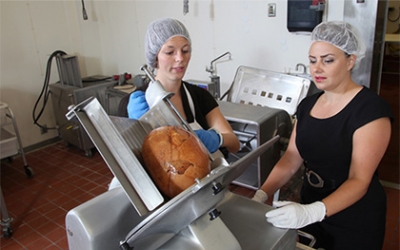
New research has found that the cleaning habits of delis fails to get rid of a dangerous type of bacteria, know as Listeria monocytogenes.
The bacteria can cause a potentially fatal disease in people with vulnerable immune systems, such as the elderly, children and pregnant women.
A study led by Professor Haley Oliver at Purdue University found that 6.8 per cent of samples taken in 15 delis tested positive for L. monocytogenes. In a second sampling phase, 9.5 per cent of samples taken in 30 delis over six months tested positive for the bacteria. The delis were spread out across the US.
In healthy individuals, eating food contaminated with L. monocytogenes may lead to common food poisoning symptoms such as diarrhea or an upset stomach.
But the bacteria can cause listeriosis - a serious systemic infection - in people with weak immune systems.
In severe cases, L. monocytogenes can pass through the intestinal membrane and into the bloodstream or cross the blood-brain barrier.
The bacteria can also cross the placental barrier in pregnant women, which can trigger abortion.
Ready-to-eat deli meats are the food most associated with L. monocytogenes, which can grow at refrigerator temperatures, unlike Salmonella and E. coli.
Most of the positive samples were collected from surfaces that usually do not come into contact with food, such as floors and drains.
But the bacteria can be transferred unintentionally from these surfaces to food, Professor Oliver said.