make preferable
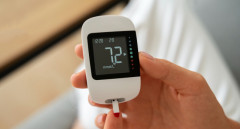
Google unveiled Thursday a contact lens that monitors glucose levels in tears, a potential reprieve for millions of diabetics who have to jab their fingers to draw their own blood as many as 10 times a day, Newsmax Health reports.
The prototype, which Google says will take at least five years to reach consumers, is one of several medical devices being designed by companies to make glucose monitoring for diabetic patients more convenient and less invasive than the traditional finger pricks.
The lenses use a minuscule glucose sensor and a wireless transmitter to help those among the world's 382 million diabetics who need insulin keep a close watch on their blood sugar and adjust their dose.
The contact lenses were developed during the past 18 months in the clandestine Google X lab that also came up with a driverless car, Google's Web-surfing eyeglasses and Project Loon, a network of large balloons designed to beam the Internet to unwired places.
But research on the contact lenses began several years earlier at the University of Washington, where scientists worked under National Science Foundation funding. Until Thursday, when Google shared the project with The Associated Press, their work had been kept under wraps.
American Diabetes Association board chair Dwight Holing said he's gratified that creative scientists are searching for solutions for people with diabetes but warned that the device must provide accurate and timely information.
The device looked like a typical contact lens when one of the lead researchers, Brian Otis held one on his index finger.
The Google team built the wireless chips in clean rooms, and used advanced engineering to get integrated circuits and a glucose sensor into such a small space.
Google is now looking for partners with experience bringing similar products to market. Google officials declined to say how many people worked on the project, or how much the firm has invested in it.
In the beach town of Santa Cruz, high school soccer coach Michael Vahradian, 21, is ready for less invasive glucose monitoring. He has been pricking himself up to 10 times a day for the past 17 years.