make preferable
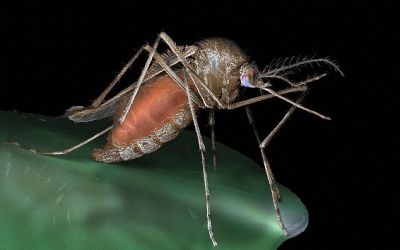
Are you someone who gets bitten to shreds by mosquitoes, while your friends escape without a scratch?
It's estimated that up to 20 per cent of us get bitten more than others - and now, a video has revealed exactly why this could be.
Various factors, from your blood type to how often you shower, can all affect the chance of getting bitten.
'When a mosquito bites and draws blood, it also injects saliva into you to stop your blood from clotting,' explains Dr Martin Donnelly, from the School of Tropical Medicine at the University of Liverpool.
'Proteins and enzymes in this saliva are what cause the irritation and itchiness.'
Whether or not your will get bitten all comes down to the 'perfect combination of genetics and scent', explains presenter Craig Benzine, in the video produced by Mental Floss.
'Eighty-five per cent of the reason why mosquitoes prefer you is genetic,' he says. So the bad news is, there's not much we can do about it.
'If you produce more lactic acid in your sweat then you're also more likely to get bitten,' he says.
Human bodies produce around 500 different volatile chemicals that waft off our skins into the air. Many of these can be detected by mosquitoes using a pair of tiny feathery antennae on their heads.
Studies have shown the insects are attracted to sweat, lactic acid, uric acid and octenol.
Lactic acid is released through pores in the skin, particularly after exercise. Uric acid is best known as a chemical in urine, but can also build up in the skin.
Octenol is found in sweat and breath - so if you’re sweaty or breathing heavily, you’ll produce more, attracting mozzies.
Some people naturally release more of these chemicals than others. If you exercise outside you tend to produce more lactic acid.
Mosquitoes also seem to like higher body temperatures, and body temperature goes up when we exercise - another reason why you may be more prone to bites after a work-out.
Mr Benzine adds that the older the sweat - say a day or so - then the more attractive you are to mosquitoes - hence frequent showering could make you less of a target.
'Mozzies that carry malaria are attracted to sweat that's been sitting on the skin for more than one day'.
Blood type can also influence how likely you are to get bitten, he says.
Research has shown that people with Type O blood are twice as likely to get bitten as those with Type B.
Type A was even less popular than Type B.