make preferable
From a plethora of apps to wearables and gadgets, there have never been more ways to count calories - but they generally rely on users remembering to enter their own data.
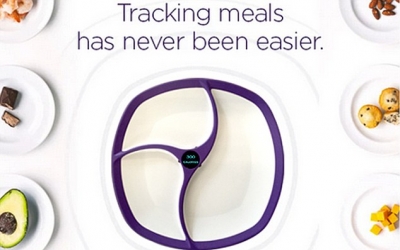
Now there’s a plate that uses hidden digital cameras to identify and measure food automatically, in a bid to ensure that dieters have the perfect portion of nutritious food for dinner.
The SmartPlate, which is currently a prototype, will be able to be linked to other wearables, such as a Fitbit, for example and show all data in on place. Anthony Ortiz, Founder and CEO of Fitly, based in Philadelphia, Pennsylvania, said the plate ‘can help you track everything you eat and do it in a way that's effortless.’ He invented it after his father had triple bypass surgery, as an easier way for people to follow dietary advice, but says it can be used by athletes ‘or anyone who wants to meet a dietary goal’.
He is raising money to put the SmartPlate into production on crowdfunding site, Kickstarter.
The plastic plate, which is divided into three sections, has three digital cameras hidden in its colourful divisions.
The cameras use object recognition algorithms to identify the types of food placed in the plate’s sections and Mr Ortiz says they are accurate 99 per cent of the time.
The plate searches an online database to grab calorie and nutrition data – and is said to be sensitive enough to spot differences in types of bread, for example, Popsci reported.
Embedded load sensors enable the gadget to weigh the food too and will send all the data to an accompanying app.
The app will analyse and track each meal, integrating extra data from wearables, fitness and other food trackers so users can see the big picture in one place.
It will be able to tell users how fast they are gobbling down their dinner and if they have eaten too many carbs for example, as well as gradually offering them personalised tips to improve their diet.
The plate will also use machine learning to get faster and more accurate when identifying its users’ favourite meals.
While it’s not microwaveable, it will come with a lid that is and shows portion divisions, to help people plan healthy meals.
The plate is subdivided to give the impression of being larger than it is.
The average dinner plate today is 12 inches in diameter and 36 per cent larger than it was in the 1960s.
Dozens of studies have found that this increase in size causes ‘portion distortion,’ so that people eat more on bigger plates. Dark colours make it harder to determine serving size too.
'For these reasons we decided to design SmartPlate in the shape of a "squircle" to give the illusion of a larger size plate while providing a 10 inch in diameter white surface area for contrast,’ Mr Ortiz said.
‘This design ensures you will serve yourself the right amount each time.’
The plate comes in three colours - purple, pink and teal – and can be pre-ordered for $100 (£66), via Kickstarter.
It's due to ship in summer 2016 and the recommended retail price is $199 (£132).
SmartPlate if not the first kitchen gadget that’s able to count calories. TellSpec, for example, uses a laser spectrometer to identify food.
Mr Ortiz said: ‘We're confident were going to disrupt the current status quo from digital entry to automatic entry.'