
 make preferable
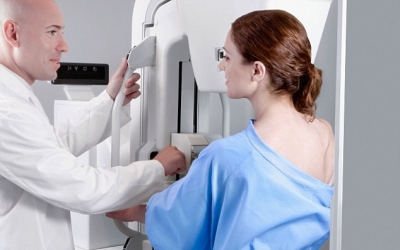
A hand-held scanner to detect breast cancer has been developed by scientists.
The prototype device, which is about half the size of a shoebox, is said to be far more comfortable than mammogram machines that are currently used in hospitals.
The scanner uses harmless near-infrared light to find tumours, while mammograms use X-rays, which can pose a health risk.
Initial results show it also more effective in analysing denser breast tissue, which is more often found in younger women, than mammograms.
Conventional mammograms can offer false negative readings in one in five cases – meaning cancer is present but not detected.
False negative readings particularly high in younger women who may have more aggressive cancers.
The first version of the machine – which fitted on a bench top – was used to test five women aged between 51 to 74 who were known to have cancerous tumours in their breasts.
This machine was a ‘proof of concept’.
The second smaller hand-held version of the machine using the same technology was used on one woman.
Developed by scientists at Florida International University, the machine can also be used to look at the side of the chest which is not possible in conventional machines.
It is hoped it will be able to be used at a bedside, or in a GP’s surgery or in a clinic.
Sarah Erickson-Bhatt, who published a paper on the device in Biomedical Physics & Engineering Express said: The women scanned always commented on how comfortable it was to be scanned by our device – many of them said that they didn’t feel anything.’
The device works by beaming light and measuring how it is scattered.
Tumours have higher levels of haemoglobin – the protein in red blood cells – and scatter light differently to healthy breast tissues.
High levels of haemoglobin may indicate a tumour.
Anu Godavarty, a co-author said: ‘Eventually, we hope that physicians will be able to use this for real-time imaging of breast tissues as part of regular visits by the patients.’





