


- Latest news▼
-
23:31, October 16 Cardiologists Urge Inclusion of Physical Exercise in Heart Disease Prevention

-
21:29, October 16 Stem Cell Reports: Nicotine Exposure During Pregnancy Permanently Weakens Offspring’s Immune Systems

-
19:15, October 16 Frontiers: Poor Sleep May Increase the Risk of Breast Cancer by 30%

-
17:26, October 16 Nature: Researchers Link Faster Wound Healing to Female Sex Hormones

-
15:05, October 16 BJN: Asparagus extract helps improve sleep and reduce anxiety

-
10:55, October 16 Science Corporation Implants Vision-Restoring Chip in First Patient With Stargardt Disease
-
08:41, October 16 Smartphone Habits Can Detect Stress With Up to 76% Accuracy, Scientists Find

-
21:36, October 15 Cardiologists Urge Inclusion of Physical Exercise in Heart Disease Prevention

-
19:41, October 15 RPTH: One to Two Cups of Coffee a Day Linked to a 51% Lower Risk of Recurrent Venous Thromboembolism

-
17:50, October 15 JACH: Eating Breakfast May Improve Psychological Flexibility

-
15:42, October 15 A Simple Way to Blunt Blood Sugar Spikes After Meals

-
12:33, October 15 Scientists Discover a Longevity Gene That Extends Lifespan by 14%

-
10:37, October 15 WHO: Lead Poisoning Claims More Than 3.5 Million Lives Every Year
-
08:47, October 15 Why It Can Sometimes Be Impossible to Stop Laughing: Neuroscientists Identify Two Mechanisms Behind Laughter

-
21:24, October 14 Molecular Cell: Bacteria Hide an Unusual Defense Mechanism That Activates When a Virus Attacks
All materials
US doctors first to 'edit' DNA of baby with rare genetic disease
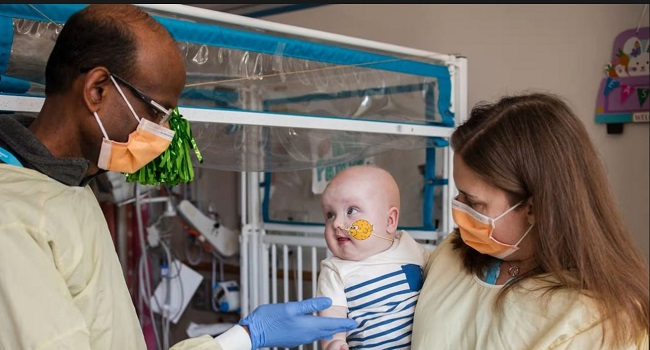
Doctors in the US have become the first to use personalized gene-editing therapy on a child after he was diagnosed with a severe genetic disease that kills about half of those affected in early childhood.
International researchers have hailed the achievement as a major medical milestone, saying it demonstrates the potential to treat a range of devastating genetic diseases by “rewriting” the defective DNA of affected children immediately after birth.
Specialists at the Children's Hospital of Philadelphia and the University of Pennsylvania jumped into action as soon as the little boy was diagnosed and completed the complex development, manufacturing and safety testing of the personalized therapy within six months. The baby received his first dose of the specially formulated drug in February, as an intravenous injection, and two more doses in March and April. Doctors said he is doing well, but he will need close monitoring for the rest of his life.
The baby was born with a severe deficiency of CPS1, which affects only one in 1.3 million people. People with this condition lack a liver enzyme that converts ammonia, which is produced during the body’s natural breakdown of proteins, into urea so that it can be excreted in the urine. This leads to a buildup of ammonia, which can damage the liver and other organs, such as the brain.
While some patients with CPS1 deficiency can receive liver transplants, children with severe disease can suffer long before they are old enough for surgery.
In a paper published in the New England Journal of Medicine, doctors described the detailed process of identifying the specific mutations underlying the little patient’s disorder, developing and treating a gene-editing therapy to correct them, and testing the fatty nanoparticles needed to deliver the virus to the liver.
The therapy uses a powerful procedure called base editing, which enables the DNA code to be “rewritten” one letter at a time.
The little boy spent the first few months of his life in the hospital on a strict diet. But after treatment, doctors were able to increase the amount of protein in his diet and use fewer drugs to remove nitrogen from his body.
The details were presented at the annual meeting of the American Society of Gene & Cell Therapy, in New Orleans. The team of doctors said long-term monitoring is needed to see how well the therapy works, but the early signs are encouraging.
Follow NEWS.am Medicine on Facebook and Twitter

- Related News
- Science Corporation Implants Vision-Restoring Chip in First Patient With Stargardt Disease Hodak, a former president and co-founder of Neuralink, argued that retinal implants should be considered part of the wider field of brain-computer interface technology...
- Lund University receives $19.4 million NIH grant to develop Alzheimer’s blood test Lund University said the grant is the largest research award it has so far received through a competitive process from a US funding organization...
- NBC News: U.S. surgeons successfully separate conjoined twin girls joined at the head Doctors cannot yet say exactly how the surgery will affect their development in the long term...
- TCTV: New Drug Doubles Survival in Lung Cancer Pembrolizumab had remained the standard first-line treatment for NSCLC for nearly a decade in patients whose tumors express the relevant biomarker...
- At-Home Urine Test Could Detect Most Bladder Cancer Cases, Study Finds The study also found that the test identified all 17 cases of muscle-invasive bladder cancer and 35 of 36 high-grade tumours...
- Video



- Event calendar
- Archive
- Most read
month
week
day
- Can a Healthy Diet Help Preserve Memory? Study Reveals Limitations of Popular Diets 847
- Blood Markers May Reveal Signs of Accelerated Immune Aging 759
- Scientists Discover How Horseback Riding Affects Behavior in Children with Autism 744
- Study: Memory Decline Between Ages 60 and 69 Is Linked to an Increased Risk of Stroke 724
- Cannabis Does Not Improve Sleep: Study Reveals an Unexpected Effect 703
- International ACTS Research Project to Support Smoking Cessation Launched in Armenia 366
- Molecular Cell: Bacteria Hide an Unusual Defense Mechanism That Activates When a Virus Attacks 333
- Chemical Senses: A Healthy Diet May Be Linked to a Better Sense of Smell 308
- HealthAI: Artificial Intelligence Helps Healthcare Shift from Treatment to Prevention 270
- Study: Healthy Diet During Pregnancy Reduces the Risk of Colic and Eczema in Children 270
- eClinicalMedicine: More Than 40% of Women with Autoimmune Diseases Have Experienced a Misdiagnosis of a Psychiatric Condition 251
- JES: Longer Sleep May Increase the Risk of Kidney Damage in People with Diabetes 250
- It's Not Just Weight: Body Shape Is Linked to Heart Attack Risk 246
- Pancreatic Cancer Can Change Its “Genetic Strategy”: Study Identifies Key Mechanisms 245
- Study: Humanity Is Losing Gut Microbes Passed Down Through Generations 221
- Find us on Facebook
- Poll