


- Latest news▼
-
23:31, October 16 Cardiologists Urge Inclusion of Physical Exercise in Heart Disease Prevention

-
21:29, October 16 Stem Cell Reports: Nicotine Exposure During Pregnancy Permanently Weakens Offspring’s Immune Systems

-
19:15, October 16 Frontiers: Poor Sleep May Increase the Risk of Breast Cancer by 30%

-
17:26, October 16 Nature: Researchers Link Faster Wound Healing to Female Sex Hormones

-
15:05, October 16 BJN: Asparagus extract helps improve sleep and reduce anxiety

-
10:55, October 16 Science Corporation Implants Vision-Restoring Chip in First Patient With Stargardt Disease
-
08:41, October 16 Smartphone Habits Can Detect Stress With Up to 76% Accuracy, Scientists Find

-
21:36, October 15 Cardiologists Urge Inclusion of Physical Exercise in Heart Disease Prevention

-
19:41, October 15 RPTH: One to Two Cups of Coffee a Day Linked to a 51% Lower Risk of Recurrent Venous Thromboembolism

-
17:50, October 15 JACH: Eating Breakfast May Improve Psychological Flexibility

-
15:42, October 15 A Simple Way to Blunt Blood Sugar Spikes After Meals
-
12:33, October 15 Scientists Discover a Longevity Gene That Extends Lifespan by 14%

-
10:37, October 15 WHO: Lead Poisoning Claims More Than 3.5 Million Lives Every Year
-
08:47, October 15 Why It Can Sometimes Be Impossible to Stop Laughing: Neuroscientists Identify Two Mechanisms Behind Laughter

-
21:24, October 14 Molecular Cell: Bacteria Hide an Unusual Defense Mechanism That Activates When a Virus Attacks
All materials
Scientists Are Trying to Recreate the World’s Rarest Blood Type
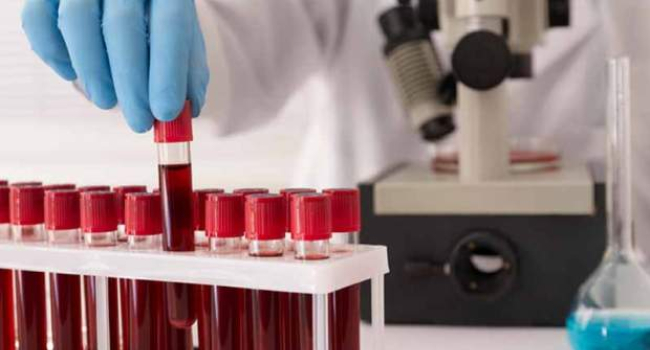
The Rh null blood type is extremely rare — occurring in roughly one out of every six million people. Today, scientists are attempting to produce it in the laboratory to help save lives.
Only 50 people are known to have one of the world’s rarest blood types, Rh null. If any of them were to end up in a situation requiring a blood transfusion, their chances of receiving compatible blood would be extremely low. People with Rh null are advised to freeze their own blood for long-term storage.
But despite its rarity, this blood type is highly valued for other reasons as well. In the medical and scientific community, it is sometimes referred to as “golden blood” because of how it can be used. Scientists are also searching for ways to overcome immune complications that currently limit the use of donor blood, and Rh null may help in creating universal blood for transfusions.
Recent studies have shown that Rh null blood is caused by genetic mutations that affect a protein that plays a key role in red blood cells, known as the Rh-associated glycoprotein, or RHAG, the BBC reports.
These mutations appear to shorten or alter the shape of this protein, preventing the expression of other Rh antigens.
In a 2018 study, Professor Toy and his colleagues at the University of Bristol recreated Rh null blood in the laboratory. To do this, they used a cell line — a population of cells grown in the lab — made up of immature red blood cells.
The team then used Crispr-Cas9 gene-editing technology to remove the genes encoding antigens from five blood group systems, which together account for most cases of transfusion incompatibility. These included ABO and Rh antigens, as well as others known as Kell, Duffy, and GPB.
“We found that if you remove all five, you get an ultra-compatible cell because it lacks the five most problematic blood group systems,” Professor Toy says.
The resulting blood cells would be compatible with all major common blood types, as well as rare ones such as Rh null and the Bombay phenotype, which occurs in one out of four million people — individuals with this type cannot receive blood from groups O, A, B, or AB.
However, the use of gene-editing methods is still considered controversial and is strictly regulated in many countries. This means that this ultra-compatible blood type will not become available for clinical use right away.
Before gaining approval, it will need to undergo extensive clinical trials and testing.
Meanwhile, Professor Toy has co-founded a company, Scarlet Therapeutics, which collects donor blood from people with rare blood types, including Rh null.
His team hopes to use this blood to create cell lines that can be grown in the laboratory to produce red blood cells. This lab-grown blood can be frozen and stored for emergencies when needed by people with rare blood types.
Professor Toy hopes to create a bank of rare blood types in the lab without using gene editing, though this technique may still play a role in the future.
“If we can do this without editing, that would be wonderful, but we see editing as an option,” he says. “Part of our work involves carefully selecting donors to make their antigens as compatible as possible for most people. Then we may need to resort to gene editing to make them compatible for everyone.”
In 2021, immunologist Gregory Denomme and his colleagues at the Versiti Blood Research Institute in Milwaukee, USA, used Crispr-Cas9 gene editing to reproduce individual rare blood types, including Rh null, from human induced pluripotent stem cells (hiPSCs).
These stem cells have properties similar to embryonic stem cells and can, under certain conditions, develop into any cell in the human body.
Other scientists are using a different type of stem cell — ones that are already programmed to develop into blood cells but have not yet determined which specific type. For example, researchers at Laval University in Quebec recently extracted blood stem cells from donors with A+ blood. They then used Crispr-Cas9 to remove the genes encoding the A and Rh antigens, producing immature red blood cells with Rh null and type O blood.
Researchers in Barcelona recently took stem cells from a donor with Rh null and used Crispr-Cas9 to convert their blood type from A to O, making it more universal.
However, despite these impressive achievements, it is important to note that large-scale production of usable lab-grown artificial blood is still far off.
One challenge is producing mature red blood cells from stem cells.
In the body, red blood cells are produced from bone marrow stem cells, which generate complex signals that guide their development. This process is difficult to replicate in the lab.
“There is an additional challenge: when creating Rh-negative blood or any other blood type lacking certain antigens, the growth and maturation of red blood cells may be impaired,” says Denomme, now Chief Medical Officer at Grifols Diagnostic Solutions, a company specializing in transfusion medicine. “Producing certain blood group genes can lead to membrane instability or loss of the ability to effectively produce red blood cells in culture.”
Currently, Professor Toy is one of the leaders of the world’s first clinical trial testing the safety of transfusing lab-grown red blood cells into healthy volunteers.
The artificial blood used in the trial was not genetically edited, but it still took 10 years of research for scientists to be ready to test it in humans.
“For now, drawing blood from a person’s arm is far more efficient and cost-effective, so we will continue to rely on blood donors for the foreseeable future,” Professor Toy says. “But it would be truly remarkable if we could grow blood in the lab for people with rare blood types, for whom donors are extremely scarce.”
Follow NEWS.am Medicine on Facebook and Twitter

- Related News
- Science Corporation Implants Vision-Restoring Chip in First Patient With Stargardt Disease Hodak, a former president and co-founder of Neuralink, argued that retinal implants should be considered part of the wider field of brain-computer interface technology...
- Lund University receives $19.4 million NIH grant to develop Alzheimer’s blood test Lund University said the grant is the largest research award it has so far received through a competitive process from a US funding organization...
- NBC News: U.S. surgeons successfully separate conjoined twin girls joined at the head Doctors cannot yet say exactly how the surgery will affect their development in the long term...
- TCTV: New Drug Doubles Survival in Lung Cancer Pembrolizumab had remained the standard first-line treatment for NSCLC for nearly a decade in patients whose tumors express the relevant biomarker...
- At-Home Urine Test Could Detect Most Bladder Cancer Cases, Study Finds The study also found that the test identified all 17 cases of muscle-invasive bladder cancer and 35 of 36 high-grade tumours...
- Video




- Event calendar
- Archive
- Most read
month
week
day
- Can a Healthy Diet Help Preserve Memory? Study Reveals Limitations of Popular Diets 846
- Blood Markers May Reveal Signs of Accelerated Immune Aging 758
- Scientists Discover How Horseback Riding Affects Behavior in Children with Autism 743
- Study: Memory Decline Between Ages 60 and 69 Is Linked to an Increased Risk of Stroke 723
- Cannabis Does Not Improve Sleep: Study Reveals an Unexpected Effect 702
- International ACTS Research Project to Support Smoking Cessation Launched in Armenia 366
- Molecular Cell: Bacteria Hide an Unusual Defense Mechanism That Activates When a Virus Attacks 332
- Chemical Senses: A Healthy Diet May Be Linked to a Better Sense of Smell 307
- HealthAI: Artificial Intelligence Helps Healthcare Shift from Treatment to Prevention 269
- Study: Healthy Diet During Pregnancy Reduces the Risk of Colic and Eczema in Children 269
- eClinicalMedicine: More Than 40% of Women with Autoimmune Diseases Have Experienced a Misdiagnosis of a Psychiatric Condition 250
- JES: Longer Sleep May Increase the Risk of Kidney Damage in People with Diabetes 249
- Pancreatic Cancer Can Change Its “Genetic Strategy”: Study Identifies Key Mechanisms 245
- It's Not Just Weight: Body Shape Is Linked to Heart Attack Risk 245
- Study: Humanity Is Losing Gut Microbes Passed Down Through Generations 220
- Find us on Facebook
- Poll