


- Latest news▼
-
22:46, September 3 At-Home Urine Test Could Detect Most Bladder Cancer Cases, Study Finds
-
20:38, September 3 Alcohol-Related Cancer Deaths Double in the U.S. as the Number of Such Deaths Rises Over 33 Years

-
18:29, September 3 An Unexpected Paradox: Both Very Low and Very High Testosterone Levels May Be Equally Dangerous for the Heart
-
16:11, September 3 The Independent: Aging Is the Main Risk Factor for Cancer

-
14:13, September 3 CC: Age-Related Changes in Memory May Begin as Early as 50

-
08:34, September 3 Scientists Find Who May Benefit More from Coffee in Terms of Parkinson’s Disease Risk

-
23:37, September 2 LDE: Popular Diabetes Drugs Linked to Risk of a Dangerous Complication in Certain Patients

-
19:45, September 2 European Journal of Nutrition: Some Additives in Ultra-Processed Foods May Be Linked to Depression Risk

-
17:29, September 2 Neuron: Human Brain Immune Cells Mature Hundreds of Times More Slowly Than Those in Mice
-
15:21, September 2 Frontiers in Nutrition: Sucralose and Stevia Altered the Gut Microbiome for Two Generations in Mice

-
13:13, September 2 Frontiers: Frequent Consumption of Sugary Drinks Linked to a 23% Higher Risk of ADHD in Children

-
11:12, September 2 Food & Function: Nuts May Accelerate Blood Vessel Recovery After Stroke

-
08:39, September 2 Scientists Discover Hidden Sign of Crohn’s Disease and Ulcerative Colitis Before a Flare-Up

-
22:41, September 1 Not Just APOE4: Scientists Identify 44 Genes That May Alter Alzheimer’s Risk
-
20:39, September 1 The Word “Diet” May Put Men Off: Study Suggests Easier Ways for Them to Lose Weight

All materials
Scientists Uncover the Heart Cells’ ‘Protective Code’ That Prevents Cardiac Regeneration
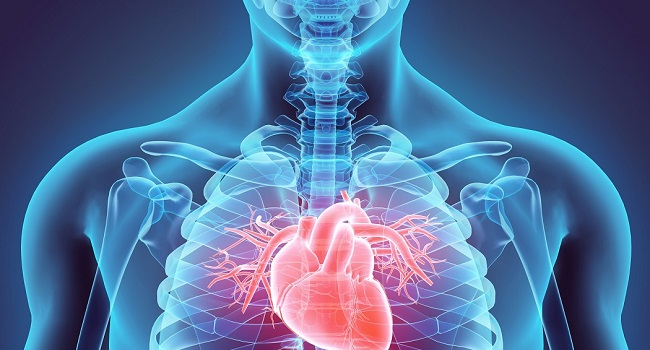
Scientists have identified a way to "awaken" the heart's ability to repair itself after a heart attack. A new study has revealed that heart muscle cells rely on a specialized protective mechanism that prevents them from changing their identity, but blocking this mechanism could help trigger cardiac regeneration.
Unlike the skin and certain other tissues, the adult human heart has very little capacity to regenerate damaged cells on its own. For years, researchers have been working to reprogram heart muscle cells so they can produce new, healthy tissue following a heart attack.
However, cardiomyocytes—the cells responsible for the heart's contractions—are highly stable. They have evolved to perform their function efficiently and strongly resist attempts to alter their identity.
Researchers from the Sanford Burnham Prebys Medical Discovery Institute and the Johns Hopkins University School of Medicine have now identified one of the key mechanisms behind this resistance. Their study, published in Nature Communications, found that a protein called CHST7 acts as a molecular "guardian" of cellular identity.
CHST7 belongs to a family of proteins involved in glycosylation—the process of modifying other molecules by attaching sugar groups. The researchers found that CHST7 is one of the strongest barriers to cellular reprogramming in both mouse and human heart cells.
The study showed that CHST7 exerts its effects through the cell-surface receptor CD44, enhancing its signaling activity. This, in turn, alters the activity of the protein JUNB, which regulates gene expression.
Together, CHST7, CD44, and JUNB form a regulatory system that helps cells maintain their original identity. They control access to DNA regions that regulate gene activity by keeping genes responsible for cellular stability active while blocking those required for reprogramming.
"By understanding how heart cells protect their identity, we can identify ways to overcome these barriers and enhance recovery after injury," the researchers said.
Further experiments identified another important molecule—an enzyme called PIP4K2C, which also helps maintain cellular stability. When the researchers simultaneously blocked PIP4K2C and induced reprogramming in the hearts of mice, the regenerative response improved significantly.
One month after a heart attack, mice receiving the combined treatment recovered heart function to about 58.6% of normal pumping capacity, compared with 24.9% in animals treated with cellular reprogramming alone.
The researchers believe the findings could pave the way for new therapies to repair heart damage. Understanding why heart cells resist changing their identity may ultimately help scientists develop treatments that enable the heart to regenerate more effectively after a heart attack.
Follow NEWS.am Medicine on Facebook and Twitter





- Most read
month
week
day
- An Unexpected Paradox: Both Very Low and Very High Testosterone Levels May Be Equally Dangerous for the Heart 925
- Alcohol-Related Cancer Deaths Double in the U.S. as the Number of Such Deaths Rises Over 33 Years 848
- European Journal of Nutrition: Some Additives in Ultra-Processed Foods May Be Linked to Depression Risk 831
- The Independent: Aging Is the Main Risk Factor for Cancer 828
- LDE: Popular Diabetes Drugs Linked to Risk of a Dangerous Complication in Certain Patients 826
- CC: Age-Related Changes in Memory May Begin as Early as 50 825
- Frontiers in Nutrition: Sucralose and Stevia Altered the Gut Microbiome for Two Generations in Mice 817
- At-Home Urine Test Could Detect Most Bladder Cancer Cases, Study Finds 808
- Neuron: Human Brain Immune Cells Mature Hundreds of Times More Slowly Than Those in Mice 800
- Scientists Find Who May Benefit More from Coffee in Terms of Parkinson’s Disease Risk 696
- Find us on Facebook
- Poll