


- Latest news▼
-
22:46, September 3 At-Home Urine Test Could Detect Most Bladder Cancer Cases, Study Finds

-
20:38, September 3 Alcohol-Related Cancer Deaths Double in the U.S. as the Number of Such Deaths Rises Over 33 Years

-
18:29, September 3 An Unexpected Paradox: Both Very Low and Very High Testosterone Levels May Be Equally Dangerous for the Heart

-
16:11, September 3 The Independent: Aging Is the Main Risk Factor for Cancer

-
14:13, September 3 CC: Age-Related Changes in Memory May Begin as Early as 50

-
08:34, September 3 Scientists Find Who May Benefit More from Coffee in Terms of Parkinson’s Disease Risk

-
23:37, September 2 LDE: Popular Diabetes Drugs Linked to Risk of a Dangerous Complication in Certain Patients

-
19:45, September 2 European Journal of Nutrition: Some Additives in Ultra-Processed Foods May Be Linked to Depression Risk

-
17:29, September 2 Neuron: Human Brain Immune Cells Mature Hundreds of Times More Slowly Than Those in Mice
-
15:21, September 2 Frontiers in Nutrition: Sucralose and Stevia Altered the Gut Microbiome for Two Generations in Mice

-
13:13, September 2 Frontiers: Frequent Consumption of Sugary Drinks Linked to a 23% Higher Risk of ADHD in Children

-
11:12, September 2 Food & Function: Nuts May Accelerate Blood Vessel Recovery After Stroke
-
08:39, September 2 Scientists Discover Hidden Sign of Crohn’s Disease and Ulcerative Colitis Before a Flare-Up

-
22:41, September 1 Not Just APOE4: Scientists Identify 44 Genes That May Alter Alzheimer’s Risk

-
20:39, September 1 The Word “Diet” May Put Men Off: Study Suggests Easier Ways for Them to Lose Weight

All materials
Scientists Reveal How Social Isolation May Increase the Risk of Alcohol Use
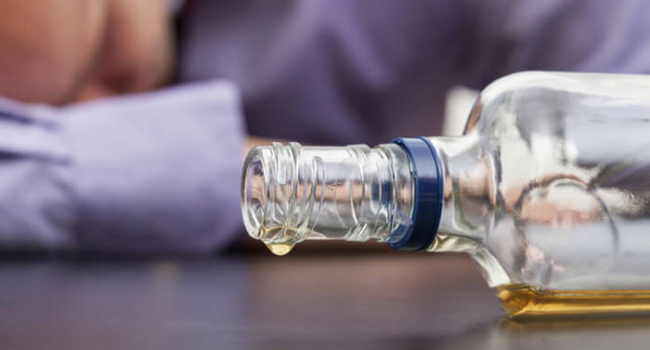
Social isolation may alter the activity of specific brain regions and, as a result, influence a person's—or an animal's—propensity to consume alcohol. This is the conclusion of a study published in Nature Neuroscience.
Experiments in mice revealed clear differences between males and females. Male mice subjected to social isolation consumed more alcohol, while isolated females, in contrast, showed a decrease in alcohol consumption.
The researchers identified a neural circuit connecting the basolateral amygdala with the medial prefrontal cortex. Increased activity in this pathway was associated with changes in alcohol-related behavior in the animals.
To determine whether this circuit actually drives alcohol consumption, the scientists used optogenetics, a technique that allows researchers to control the activity of nerve cells using light. Artificially activating the circuit in male mice that had not experienced social isolation caused them to consume alcohol at levels similar to those observed in animals that had been isolated.
Conversely, suppressing activity in this neural pathway reduced alcohol consumption.
According to the researchers, the findings provide new insight into the biological mechanisms that may link loneliness and social isolation to an increased risk of excessive alcohol use. The newly identified neural circuit could potentially serve as a target for developing new approaches to preventing and treating alcohol use disorders.
The study also highlights important sex differences: the same factor—social isolation—had opposite effects on alcohol-related behavior in male and female mice. Because the experiments were conducted in animals, however, the findings cannot yet be directly applied to humans.
Follow NEWS.am Medicine on Facebook and Twitter





- Most read
month
week
day
- An Unexpected Paradox: Both Very Low and Very High Testosterone Levels May Be Equally Dangerous for the Heart 907
- Alcohol-Related Cancer Deaths Double in the U.S. as the Number of Such Deaths Rises Over 33 Years 829
- European Journal of Nutrition: Some Additives in Ultra-Processed Foods May Be Linked to Depression Risk 814
- LDE: Popular Diabetes Drugs Linked to Risk of a Dangerous Complication in Certain Patients 809
- The Independent: Aging Is the Main Risk Factor for Cancer 808
- CC: Age-Related Changes in Memory May Begin as Early as 50 806
- Frontiers in Nutrition: Sucralose and Stevia Altered the Gut Microbiome for Two Generations in Mice 800
- At-Home Urine Test Could Detect Most Bladder Cancer Cases, Study Finds 791
- Neuron: Human Brain Immune Cells Mature Hundreds of Times More Slowly Than Those in Mice 784
- Frontiers: Frequent Consumption of Sugary Drinks Linked to a 23% Higher Risk of ADHD in Children 776
- Food & Function: Nuts May Accelerate Blood Vessel Recovery After Stroke 729
- Scientists Find Who May Benefit More from Coffee in Terms of Parkinson’s Disease Risk 678
- Find us on Facebook
- Poll